Quick summary
- The Best Value all-inclusive reef trip is a 1-day cruise from Cairns with an English-speaking instructor.[1]
- Departures for reef boats from Cairns take place at the Reef Fleet Terminal, 1 Spence Street.[2]
- Spanning more than 2,300 kilometres, the Great Barrier Reef contains some 3,000 separate coral reefs.[3]
- The booked tour is rated 4.51 from 456 reviews, with an English-speaking instructor.[1]
- Marine stinger season in tropical Queensland typically runs from November through to May.[4]
- Top choice All-inclusive Reef Trip from US$196 Duration1 day[1]Rating4.51 from 456 reviews[1]LanguageEnglish[1] Check availability
- Fitzroy Island Day Trip from US$76 Duration8 hours[5]Rating4.53 from 1,899 reviews[5]LanguageEnglish[5] See this tour
- Reef Cruise with Heli Flight from US$309 Duration8.5 hours[6]Rating4.63 from 1,118 reviews[6]LanguageChinese, English[6] See this tour
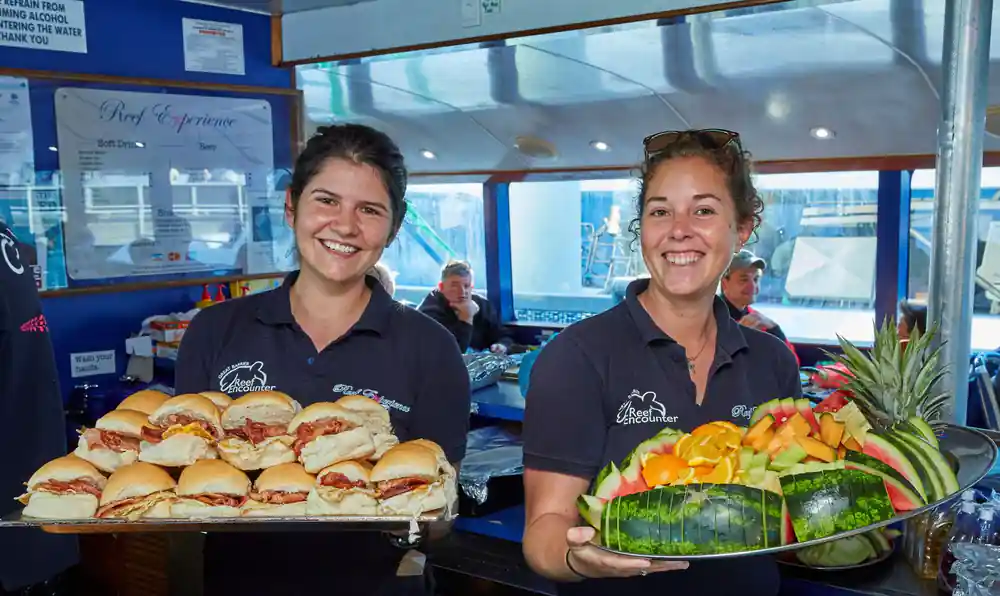
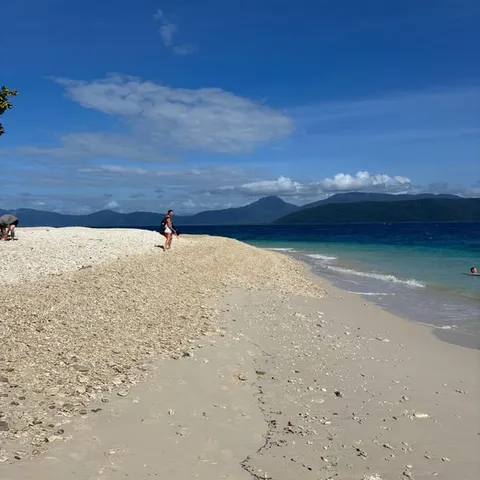
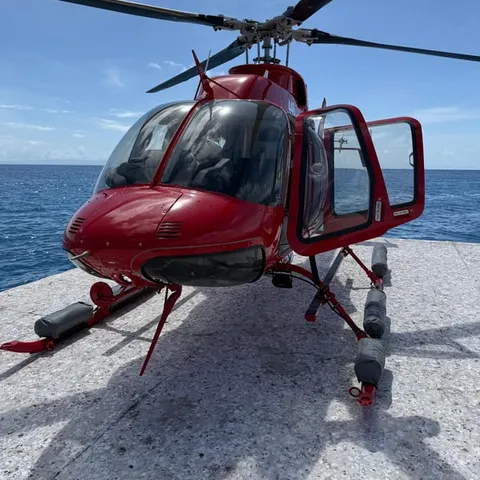
Every tour departs from the Reef Fleet Terminal, 1 Spence Street, Cairns .
Let your comfort level pick your reef day
Before setting off
The Decision This Trip Removes
Standing on the Cairns waterfront, the main question is simple: should you snorkel or dive? The answer does not have to be fixed before you board. An English-speaking instructor accompanies the 1-day Best Value All-inclusive Reef Trip With Scuba Dive, which departs from Cairns.[1] On the same boat you can try both, so the real choice is about your comfort in the water. Some people know straight away that they want to be under the surface; others prefer to float above it and watch the action from the top.
The practical side is easy too. Departures for reef boats from Cairns take place at the Reef Fleet Terminal, 1 Spence Street.[2] Located on the Outer Reef, the Moore Reef pontoon is 47 km from shore.[8] You can sit back, watch the coastline fade, and let the crew handle the navigation, the gear and the safety briefings. By the time the boat slows, you are already in the middle of the Marine Park and the only decision left is how deep you want to go.
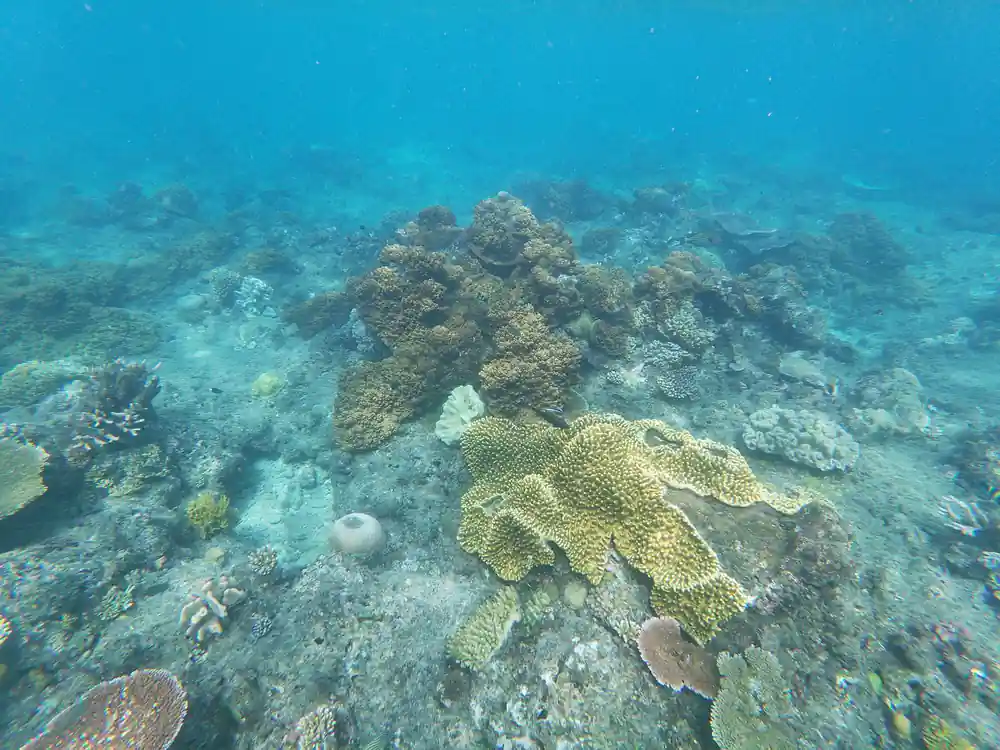
Once you are there, the day is yours. Snorkellers and divers share the same coral gardens, the same warm water, and the same chance to see turtles, rays and clouds of fish. The only difference is your angle of view. A snorkeller looks down at the reef from above; a diver slips below the surface and becomes part of the scene. Both are valid, and both can fill a day with memories.
What Diving Actually Shows You
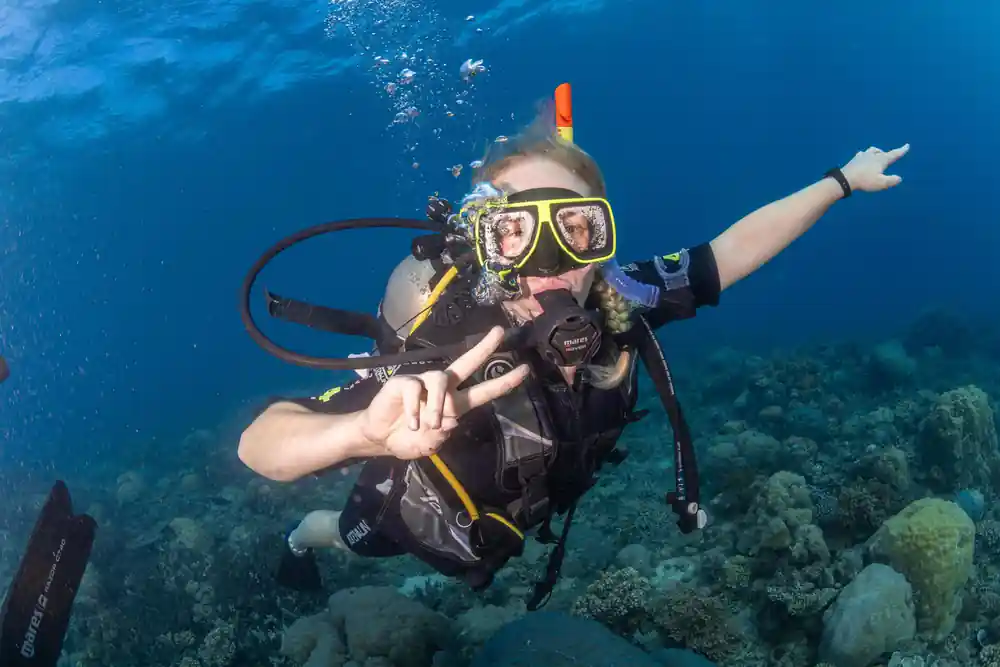
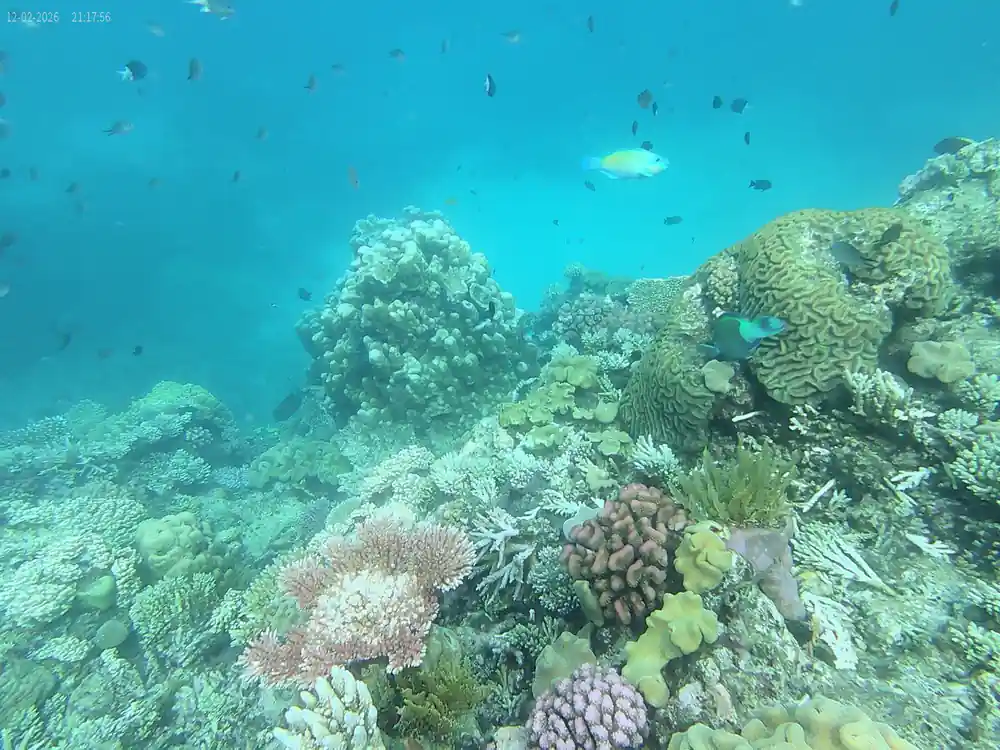
Scuba diving puts you inside the scene. Instead of looking down from the surface, you drift beside the coral and meet fish at their own level. The reef becomes three-dimensional: overhangs, caves, shelves and blue water fading into the distance. Your breath is slow, your movements are unhurried, and the fish barely seem to notice you. For many people, that sense of weightless observation is the whole point of diving.
If you have never dived, an introductory dive is the usual starting point. The Best Value trip is listed with scuba dive and has an instructor who speaks English.[1] You learn a few simple skills, stay close to the instructor, and keep the dive shallow and short. There is no expectation that you will be an expert. The aim is simply to get you safely below the surface so you can see the reef from the inside.
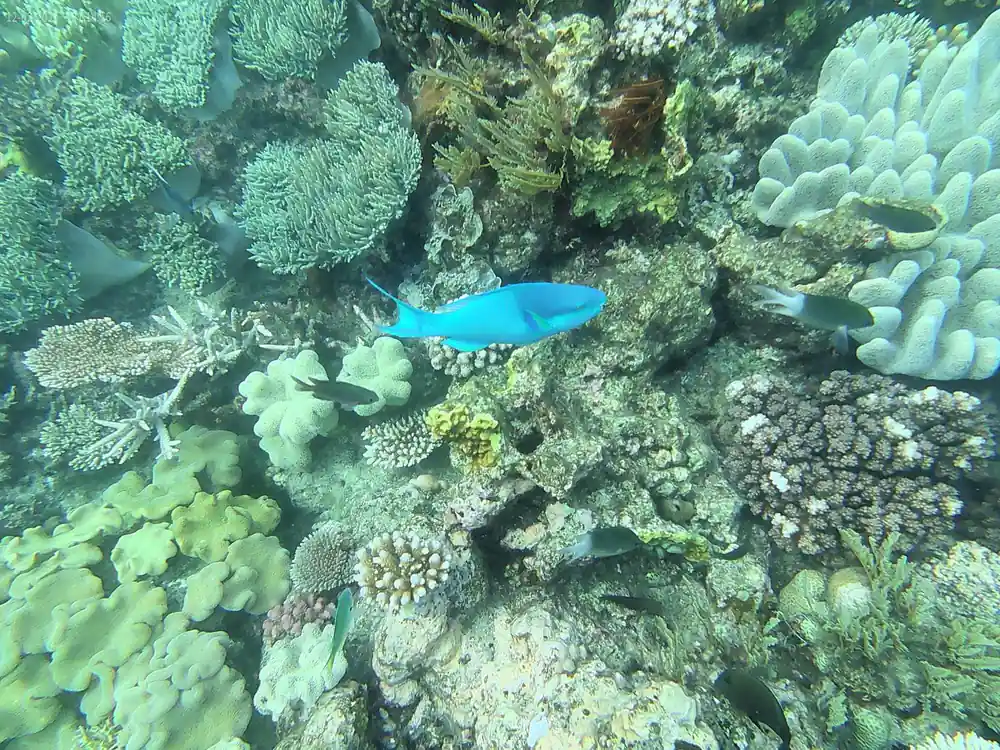
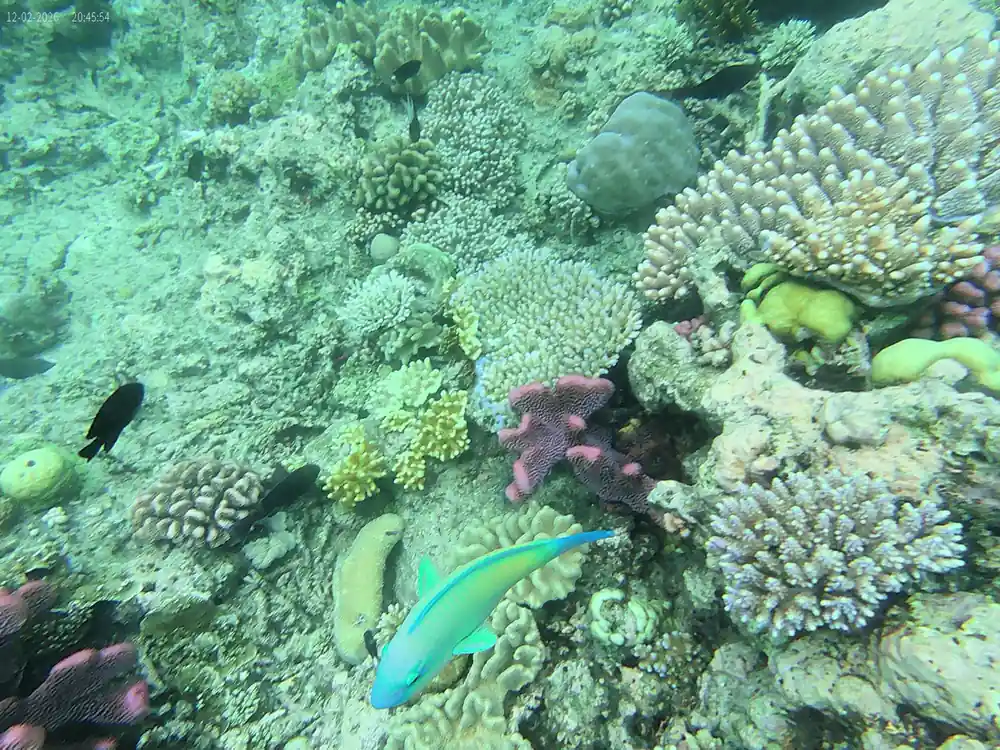
This enormous reef, which you are about to enter, stretches over 2,300 kilometres and consists of around 3,000 separate coral reefs.[3] A single dive shows you a small, vivid slice of that living system. Yet that small slice is often enough. Divers return to the surface talking about the colours, the light, and the moment a turtle swam past. The scale gives you context; the dive gives you the detail.
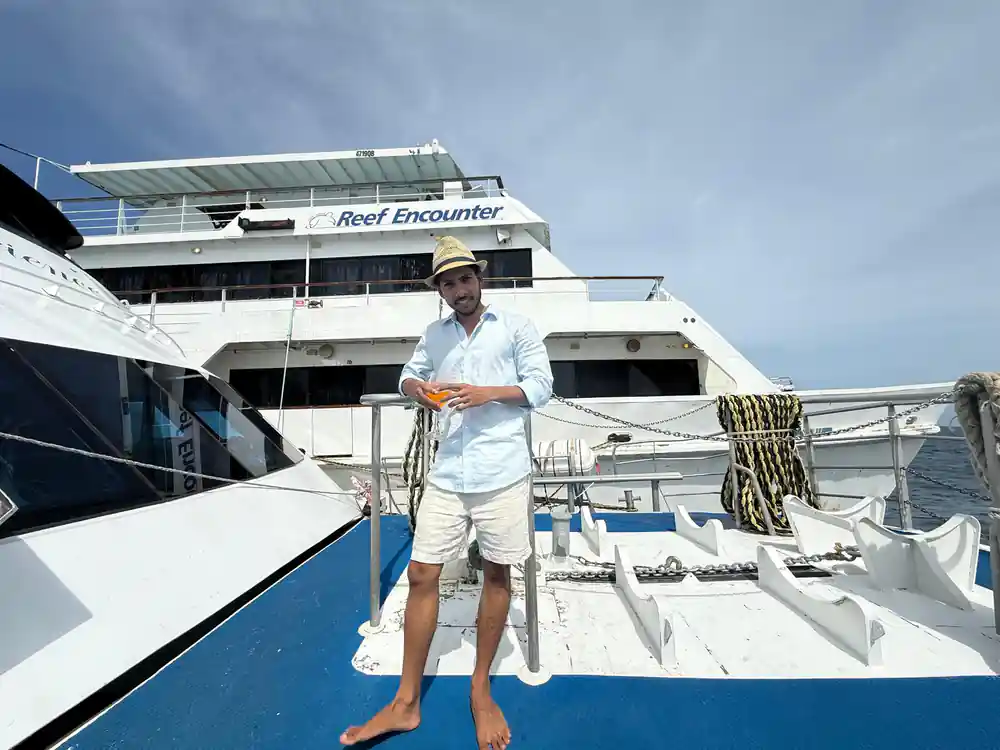
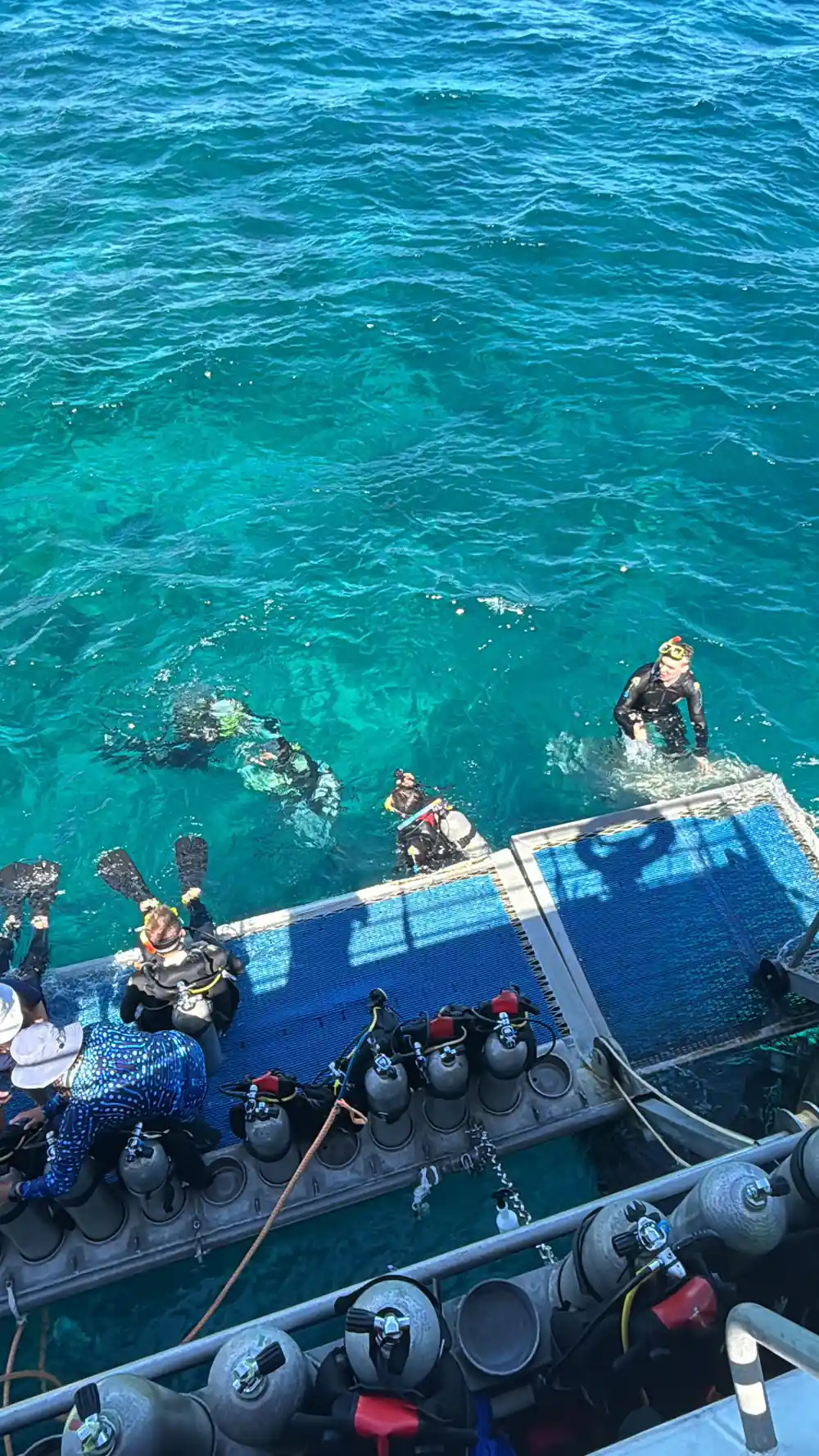
A catamaran moored beside the reef while swimmers gather at the platform.
What Snorkelling Gives You Instead
Snorkelling is the most relaxed way to meet the reef. On the surface you float, using a tube to breathe, and observe the coral realm opening up underneath. You can swim a little or a lot, and you can stop whenever you like. The water holds you up, which lets you spend long minutes watching a single fish without getting tired. It is the easiest way to see a huge amount of marine life with almost no training.
The crew on a reef day are used to snorkellers of every level. They help with masks, fins and buoyancy aids, and they keep an eye on the group. Being a strong swimmer isn't necessary for the morning outing; you only need to feel at ease in open water. If you are, the surface of the reef is one of the richest shows in nature, with coral bommies, schooling fish and the occasional turtle rising for air.
If you would rather mix an island with your reef time, a Fitzroy Island full-day trip with optional extras costs from US$76.[5] It is a different feel, with a sandy island and calm waters. The trip lasts 8 hours.[5] It gives you time to snorkel, walk the beach and eat lunch at your own pace. It is a good choice if you want a broader day out rather than a deep dive.
The Introductory Dive, Precisely
An introductory dive usually begins with a short briefing on the boat. The instructor explains how to clear your mask, equalise your ears and breathe through the regulator. You practise on the surface before descending together. Some people find the first few breaths underwater strange; within a minute that strangeness usually turns into concentration. You check your air, follow the instructor, and let the reef take over.
Underwater, the group stays close. You follow the instructor, check your air, and let the fish do the entertaining. The scale of the reef, the light through the water and the silence are the parts people remember. The dive does not need to be long to feel complete. A short, shallow, well-supervised dive can be exactly the taste you need to decide whether to pursue certification.
The Best Value trip lasts 1 day.[1] It gives you time for both snorkelling and diving without feeling rushed. You can swim on the surface in the morning, join the dive group for a session, and still have time to warm up and eat on the boat. It is a gentle introduction to a much bigger underwater world, and it leaves you with a clear idea of what comes next.
from US$196
The all-inclusive reef trip from Cairns is priced from US$196[1].
If You're Already Certified
Certified divers do not need an introductory session, so look for trips that offer more time underwater and more variety. That variety matters because each reef has a different personality. A site with a steep wall, a sandy gutter and a coral garden can keep a diver busy for hours, and moving between sites gives you a broader sense of the reef system.
For a longer expedition, an overnight snorkelling boat trip runs for 2 - 3 days and is priced from US$435.[9] That suits divers who want to wake up on the reef and log extra dives. Overnight trips also let you see the reef at different times of day, when the light changes and some creatures become active. If you have the time, this is a completely different experience from a day trip from Cairns.
Certification also means you can be more relaxed about the plan. You can pick a tour by its dive sites, group size and departure point, rather than by the beginners' briefings. Ask the operator directly about how many divers are in a group and whether the itinerary includes a second dive before lunch. The details matter more when you already know exactly what you want.
Which Suits a Nervous Swimmer
If the idea of going underwater makes you tense, start with snorkelling. You stay at the surface, wear a buoyancy aid if you like, and can lift your head any time. There is no rush and no pressure to dive. The best approach is to tell the crew how you feel; they are used to nervous swimmers and will help you find a calm entry point. You can spend the whole day snorkelling and still feel part of the reef.
The Best Value reef trip has an English-speaking instructor, so you can ask questions and watch how the dive group is organised before you decide.[1] Many people feel braver once they see how calm the water is and how patient the crew are. If you do not dive, nobody will mind. If you change your mind after lunch, there is often room to join the next group. The day works at your pace.
A stable platform helps too. At 47 km from shore on the Outer Reef, the Moore Reef pontoon is a stable two-storey base.[8] Great Adventures operates daily tours from Cairns to an Outer Great Barrier Reef Pontoon.[10] You can enter the water gradually from a pontoon and rest between swims, which makes the day feel less demanding. For a nervous swimmer, a few quiet minutes beside the platform is the perfect introduction.
The Rest of the Day
A reef day is more than the time in the water. There is the boat ride, the changing light, the company and the unhurried minutes between swims. The 1-day format lets you rest, eat, and talk about what you saw.[1] You might spot a turtle from the deck, trade stories with a fellow traveller, or simply sit in the sun while the engine hums. Those quiet moments are often the ones that make the day feel complete.
Return boats dock back in Cairns, so you can plan the evening once you step ashore. Bring a towel, sunscreen, a windproof layer and a little patience if the boarding queue is long. The crew will handle your gear, but it helps to keep your camera and dry clothes in a waterproof bag. Arrive early, find your seat, and treat the crossing as part of the adventure.
After the trip, you will have a clearer idea of which side of the reef you prefer. That is exactly the kind of decision that earns its memory. The next time you are in Cairns, you will know before the boat leaves the terminal whether you want to stay on the surface or slip below it. Either way, you will already know why the reef draws so many people back.
Life on the reef
Species counts from[11].
Compare from-prices
Adult from-prices:[1],[5],[6].
When to go
Choose your reef day
Decide dive or snorkel
Think about comfort in the water more than experience. Either way you stay close to the crew.
Pick the trip length
The booked tour lasts 1 day.[1]
Check the season
Roughly May through October is the dry season, while December to March is roughly the wet season.[12]
Pack for the boat
Sunscreen, towel, a hat, a light jacket and a sense of humour.
Book and arrive early
Departures for tours are at 1 Spence Street, from the Reef Fleet Terminal.[2]
Ready to pick between snorkelling and diving on the reef?
from US$197Reserve now & pay later