Quick summary
- Green Island is 27 kilometres off Cairns with a 45-minute catamaran ride; Fitzroy Island is 29 kilometres southeast, also about 45 minutes.[1][2]
- Daily tours from Cairns reach outer reef pontoons such as Moore Reef, which sits 47 km offshore.[3][4]
- The Best Value All-inclusive Reef Trip with Scuba Dive runs one day from US$196, with an English-speaking instructor and free cancellation.[5]
- Dry season runs May to October; wet season runs December to March. Stinger season typically runs November through to May.[6][7]
- Bring layers for the boat trip; in summer the reef water averages 29°C, and in winter 24°C.[8]
- Top choice Best Value All-inclusive from US$196 Duration1 day[5]HighlightsCatamaran, two reef stops and scuba diveLanguageInstructor: English[5]CancellationFree cancellation up to 24 hours[5] Check availability
- Fitzroy Island Full-Day from US$76 Duration8 hours[9]HighlightsIsland time with optional extrasLanguageHost or greeter: English[9]CancellationFree cancellation up to 24 hours[9] See this tour
- Outer Reef + Helicopter from US$309 Duration8.5 hours[10]HighlightsReef cruise plus scenic helicopter flightLanguageInstructor: Chinese, English[10]CancellationFree cancellation up to 24 hours[10] See this tour
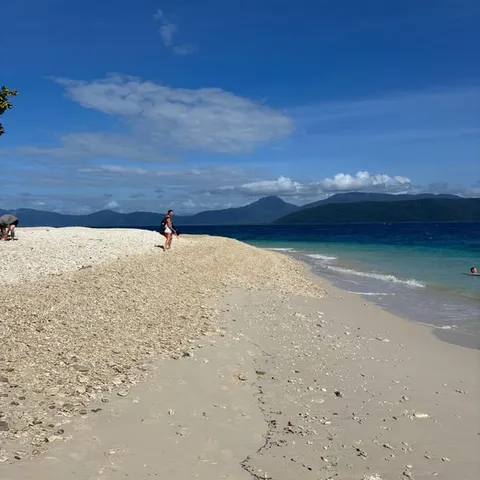
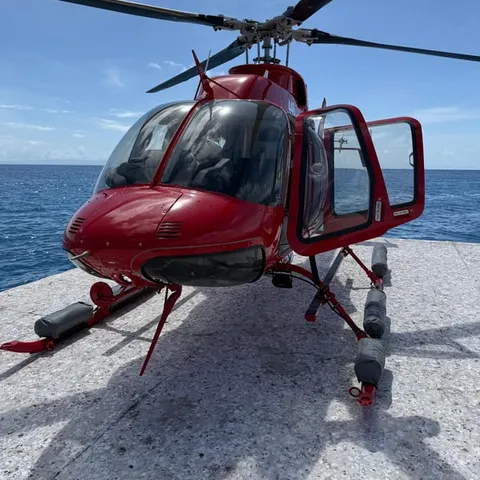
Explore the magnificent Great Barrier Reef with Great Adventures' daily tours from Cairns, Tropical North Queensland.
Choose the version that fits your day
Check before booking
One day, two very different mornings
Cairns reef days begin at the Reef Fleet Terminal, 1 Spence Street, where operators line up along the harbour.[11] From the same stretch of water you can head to a sandy island or push further out to the outer reef. The choice comes down to how much boat time you want, how confident you feel in the water, and whether you want land nearby. There is no wrong answer, but the two versions feel very different once you are on board.
A catamaran ride of about 45 minutes reaches Green Island, which lies 27 kilometres from Cairns.[1] Fitzroy Island is 29 kilometres southeast of the city and the ferry ride takes about 45 minutes.[2] Great Adventures runs daily tours from Cairns to an outer reef pontoon.[3] Moore Reef's pontoon sits 47 km offshore on the Outer Reef.[4]
Those times change the shape of the day. An island crossing is quick enough that you can be on the sand before the day heats up. An outer reef run feels more like an expedition, but it puts you beside the reef itself for a long stretch on site. If you love being in the water, that extra boat time buys you more reef time. If you prefer dry land and a café, the islands win.
What sits close to the coast
The islands close to Cairns are not the outer reef, yet they have their own appeal. Green Island is a coral cay with shallow reef flats, beaches and snorkelling right off the sand.[1] Fitzroy Island is a continental island with rainforest walks and fringing reef.[2] Both give you a place to stand, dry off and explore between swims. They work well for families and for anyone who wants a softer introduction to the reef.
For a full day on Fitzroy, the Cairns Fitzroy Island full-day trip with optional extras runs for 8 hours.[9] A full-day Green Island cruise from Cairns also runs for 8 hours.[13] On either island you can snorkel from the beach, explore on foot, or simply settle in with a book. The ferry does the work, and the day has a relaxed holiday rhythm.
Half-day options suit travellers who want a taste of the reef without committing to a full day. A morning Green Island cruise runs for 4 hours.[14] An afternoon cruise to Green Island also runs for 4 hours.[15] These trips still give you time for a swim and a walk, with the rest of the day free for the city or the rainforest.
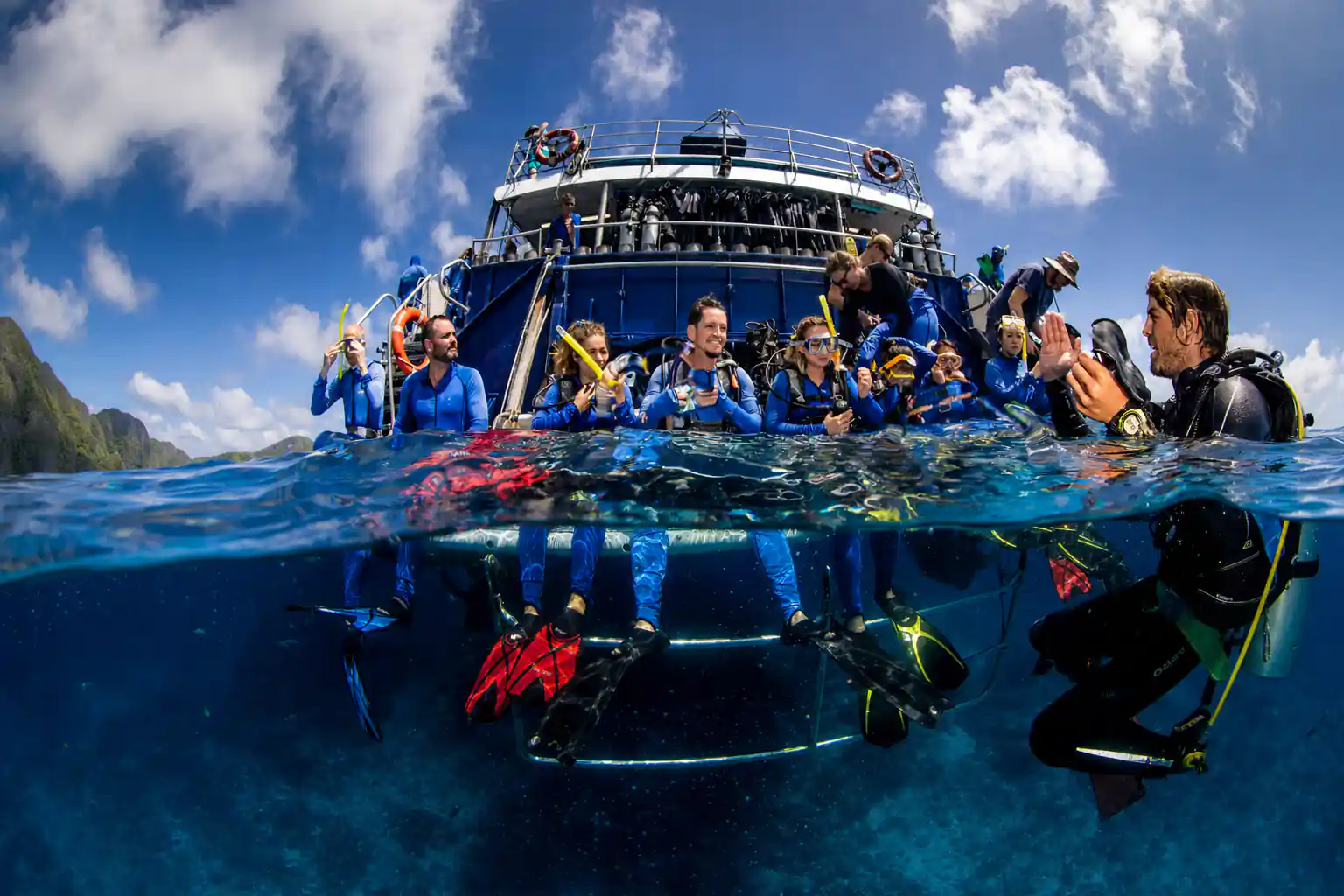
Crew and snorkellers gather around the platform at the back of a reef catamaran.
What sits out on the outer reef
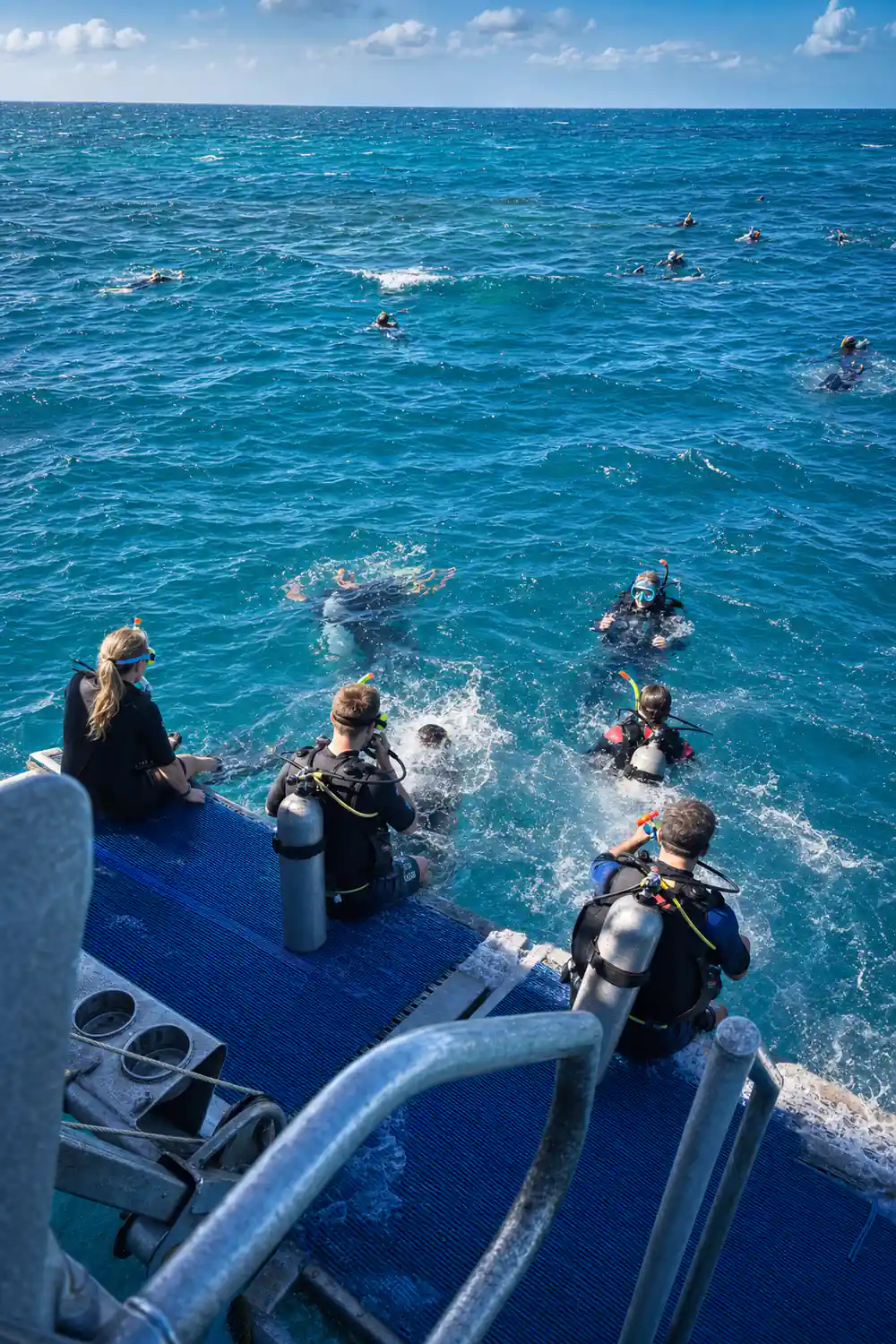
Outer reef trips from Cairns head to sites that are farther from the coast and from river runoff. Great Adventures runs daily tours from Cairns to an outer reef pontoon.[3] Moore Reef's pontoon sits 47 km offshore on the Outer Reef.[4] Once you arrive, the boat or pontoon becomes your base and you can hop in and out of the water without chasing a tender.
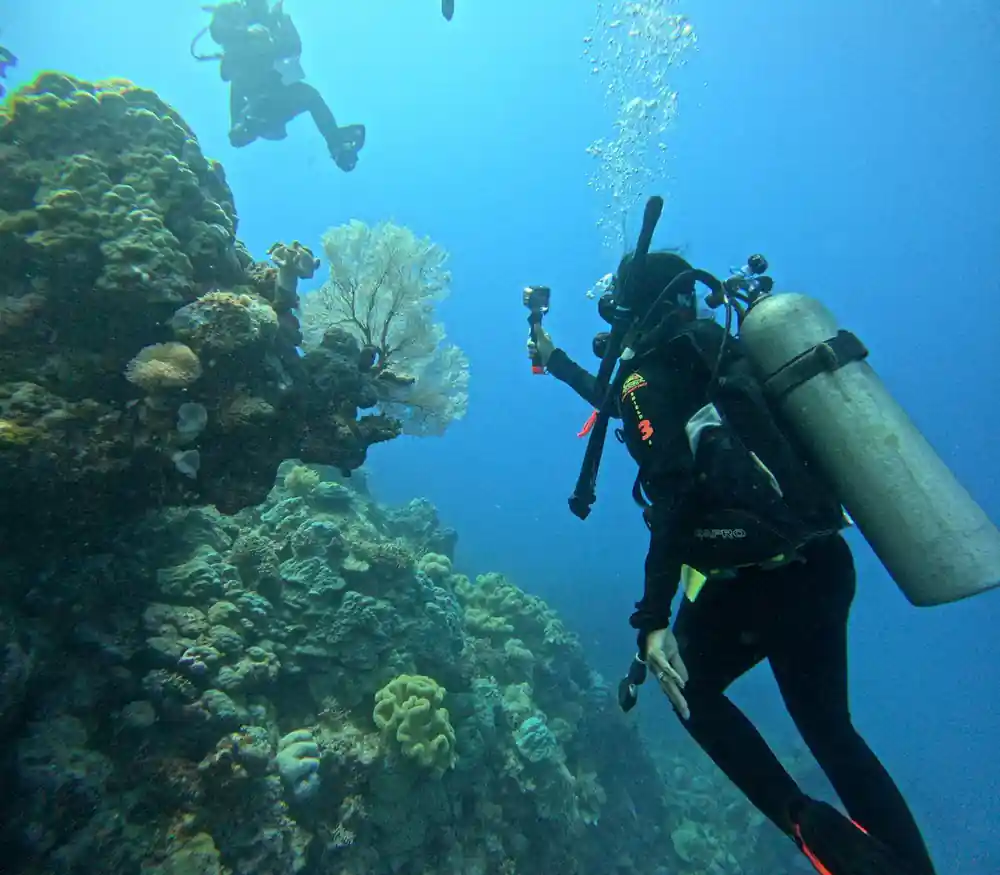
The Best Value All-inclusive Reef Trip with Scuba Dive is a one-day catamaran trip to the Great Barrier Reef led by an English-speaking instructor.[5] It is priced from US$196, with reserve now and pay later and free cancellation up to 24 hours.[5] The itinerary includes two stops at the Great Barrier Reef.[5] For anyone who wants to dive, this keeps the whole day simple: one booking, one boat, and two chances to get in the water.
Other outer reef trips build in extra drama. A Great Barrier Reef cruise with scenic helicopter flight lasts 8.5 hours and is priced from US$309.[10] A premium snorkelling and diving day trip from Cairns runs for 8 hours.[16] If you are weighing a short flight over the reef, these hybrids let you see the reef from above and below in the same day.
Coral, sediment and how clear the water gets
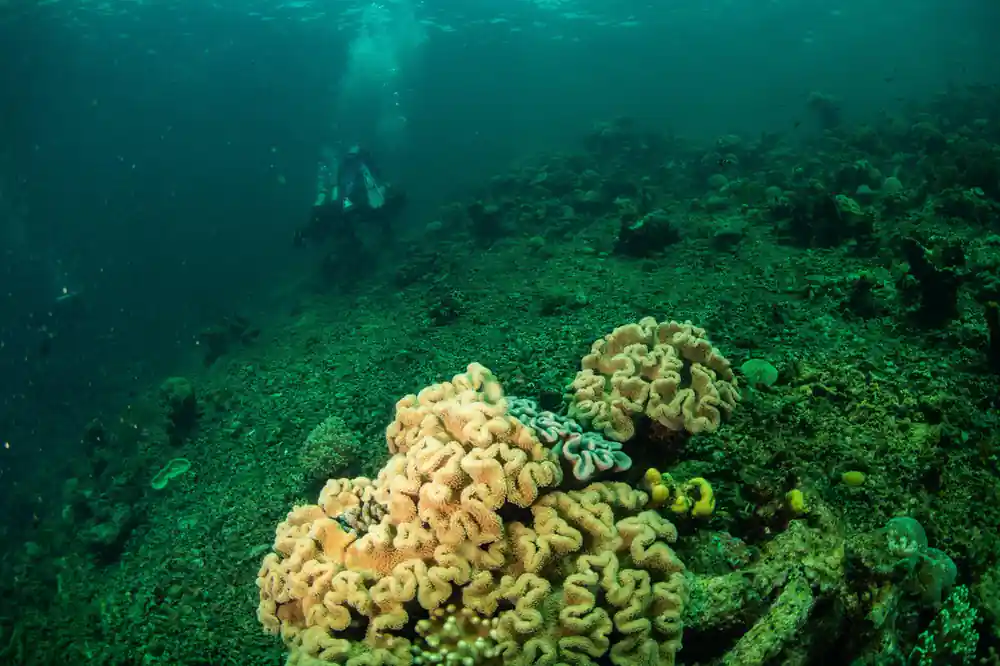
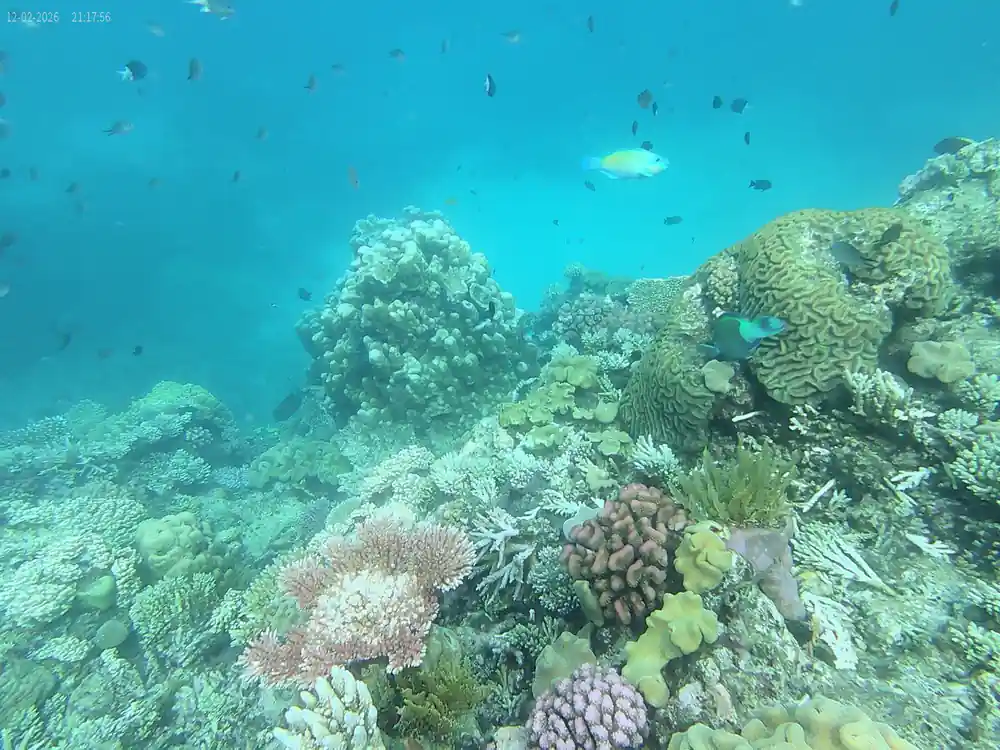
The Great Barrier Reef system extends more than 2,300 kilometres along northeastern Australia and is made up of about 3,000 individual reefs.[17] The ecosystem supports more than 1,600 fish species, over 600 coral species, and six of the seven marine turtle species found worldwide.[18] Those numbers give a sense of the scale of the system.
Close to shore, freshwater and sediment can make the water more sheltered. Further out, the reef sits in clearer Coral Sea water, with better visibility and more varied coral growth. The difference is not absolute; you can have good snorkelling at an island on a calm day, and the outer reef can be choppy in a strong breeze.
Reef health also changes over time. Hard coral cover on the northern Great Barrier Reef increased from 30.0% in 2025 to 35.1% in 2026, according to the latest AIMS monitoring.[19] That is a snapshot of a fast-moving system, and conditions can vary between sites.
from US$196
A full day on the outer reef with scuba diving, an English-speaking instructor and a catamaran that stops twice at the reef.
Who is better off staying closer in
An island day is the gentler option. About 27 kilometres from Cairns, Green Island is reached in roughly 45 minutes by catamaran.[1] Fitzroy Island is 29 kilometres southeast of the city, about 45 minutes by ferry.[2] You are never far from land, and there is usually a beach, a walking track or a sheltered cove to fall back on.
Families with younger children, travellers who prefer not to be far from shore, and anyone who wants a mix of reef and land will probably enjoy an island trip more. You can still snorkel and take in coral, but the day is less intense than an outer reef expedition. If someone in your group is not a strong swimmer, the island version keeps everything within easy reach of the shore.
The Fitzroy Island full-day trip with optional extras is priced from US$76 and lasts 8 hours.[9] A full-day Green Island cruise is priced from US$77 and lasts 8 hours.[13] These are friendly entry points for a first reef experience, and they leave the rest of your itinerary free.
Who the outer reef suits, and whether you can do both
The outer reef suits confident snorkellers, certified divers, and travellers who have come specifically to see the reef. The all-inclusive trip from Cairns runs for one day, is priced from US$196, and includes scuba diving with an English-speaking instructor.[5] The catamaran stops at the reef twice, which gives you more time to float over coral gardens and watch the fish move through the columns of sunlight.
If you have several days in Cairns, you can do both an island day and an outer reef day. The island day gives you beaches and a quick ferry ride. The outer reef day gives you more time in the water and a stronger sense of the reef itself. Travellers who love the water often find the outer reef is the highlight of their trip, while the island becomes the easy rest day.
A scenic flight can be added to a reef cruise if you want the view from above. The outer reef cruise with scenic helicopter flight takes 8.5 hours and is priced from US$309.[10] If you are not sure which to book, ask yourself where you would rather be at midday: standing on sand or floating over coral.
Planning around seasons, stingers and the reef charge
Cairns has two main seasons. The dry season lasts from about May to October, bringing sunny weather, low humidity, and warm days; the wet season, from roughly December to March, is hot, humid, and prone to thunderstorms.[6] Typically, the marine stinger season lasts from November to May.[7]
Off Cairns, summer water temperatures on the reef average 29°C, while winter temperatures average 24°C.[8] Bring sunscreen and a light layer to wear on the boat; in the tropics, sea breezes can still feel cool. A rash vest helps with both sun and stinger protection, although you should follow the advice of your crew.
A full-day passenger pays $8.50 per day for the Great Barrier Reef Environmental Management Charge.[12] Ask whether your trip already includes it when you book. The charge supports the management of the marine park, and it is a small part of the overall cost of a reef day.
Distance from Cairns by boat
Distance from Cairns by boat: Green Island 27 km ([1]), Fitzroy Island 29 km ([2]), Moore Reef 47 km ([4]).
Compare your reef day budget
US$ from-prices from[5],[9] and[10]. Child-specific fares are not published; the from-price is shown for planning.
When to go
Choose your reef day
Decide your style
Decide how much boat time you want: about 45 minutes to Green Island or Fitzroy Island, or a longer crossing to the outer reef.[1][2]
Pick a trip
The Best Value All-inclusive Reef Trip with Scuba Dive is a one-day catamaran trip with an English-speaking instructor.[5]
Check cancellation
This trip allows free cancellation up to 24 hours before the day.[5]
Know the departure point
Departures for Cairns reef boats are from the Reef Fleet Terminal, 1 Spence Street.[11]
Pack for the sea
Winter water temperatures average 24°C, while summer averages 29°C.[8]
Reserve your all-inclusive outer reef day from Cairns
from US$197Reserve now & pay later