Quick summary
- Cairns' pontoons are located at the outer edge of a reef system stretching over 2,300 kilometres and containing some 3,000 separate reefs.[1]
- Sunlover's Moore Reef pontoon sits 47 kilometres offshore on the Outer Reef, and Great Adventures runs daily tours from Cairns to an outer pontoon.[2][3]
- The featured all-inclusive reef trip with scuba dive is from US$196, rated 4.51 from 456 reviews, with free cancellation up to 24 hours in advance.[4]
- Roughly May through October is the dry season, and roughly December through March is the wet season. Marine stinger season typically runs November through to May.[5][6]
- On the northern Great Barrier Reef, hard coral cover rose from 30.0% in 2025 to 35.1% in 2026.[7]
- Top choice Best Value All-inclusive from US$196 Duration1 day[4]Rating4.51 from 456 reviews[4]Guide languageEnglish[4]CancellationFree up to 24 hours[4] Check availability
- Premium Snorkelling Day Trip from US$0 Duration8 hours[8]Rating4.65 from 1,563 reviews[8]Guide languageEnglish[8]CancellationFree up to 24 hours[8] See this tour
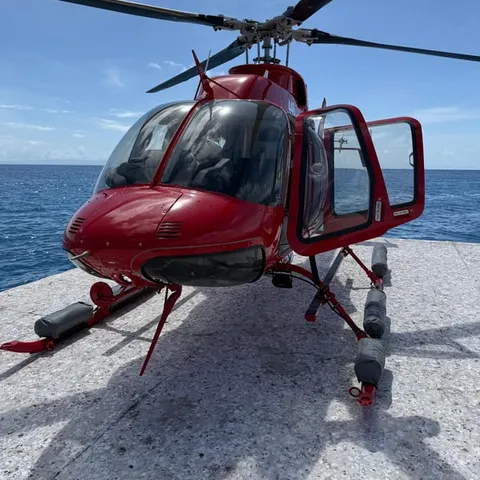
- Reef Cruise with Helicopter from US$309 Duration8.5 hours[9]Rating4.63 from 1,118 reviews[9]Guide languageChinese, English[9]CancellationFree up to 24 hours[9] See this tour
Every tour departs from the Reef Fleet Terminal, 1 Spence Street, Cairns .
The Bottom Line on Outer Reef Tours from Cairns
Check before booking
- Check whether the Reef Environmental Management Charge is included or added at check-in.
- Look for tours with reserve now and pay later if you want flexibility.
- Review the cancellation policy before you commit to a date.
- Most outer reef trips occupy a full day; plan nothing else that day.
On the Day
- Head to the Reef Fleet Terminal in Cairns for check-in.
- Wear reef-safe sunscreen, a rash vest and a hat; the tropical sun is strong.
- Water temperatures vary by season, so ask the crew about the day's conditions.
- Crews are used to first-time snorkelers; tell them if you are nervous.
What Outer Reef Actually Means
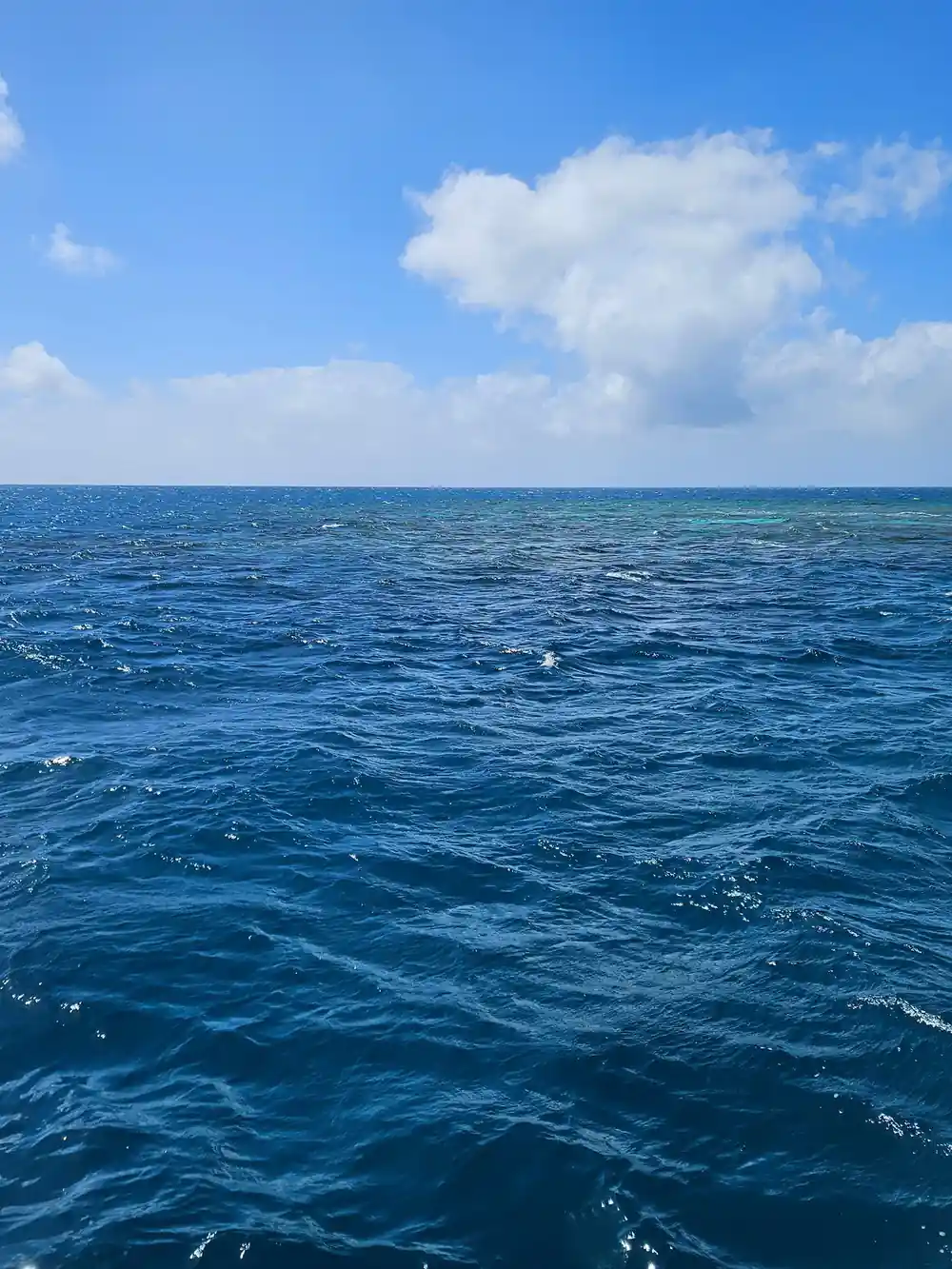
When tour listings say 'outer reef', they are pointing to the seaward edge of the Great Barrier Reef, the part that catches the cleanest water and feels most exposed. Far from being a thin ribbon, this reef system forms a vast living network along Australia's northeast coast, stretching over 2,300 kilometres and made up of some 3,000 coral reefs.[1] That scale is hard to picture from shore, and planning an outer reef day brings it into focus. Picture a chain of coral gardens, sand cays and deep channels running along the edge of a continent. Standing on the pontoon, the mainland is a hazy line behind you, and the water ahead stretches to the horizon. That is the scale you are buying into.
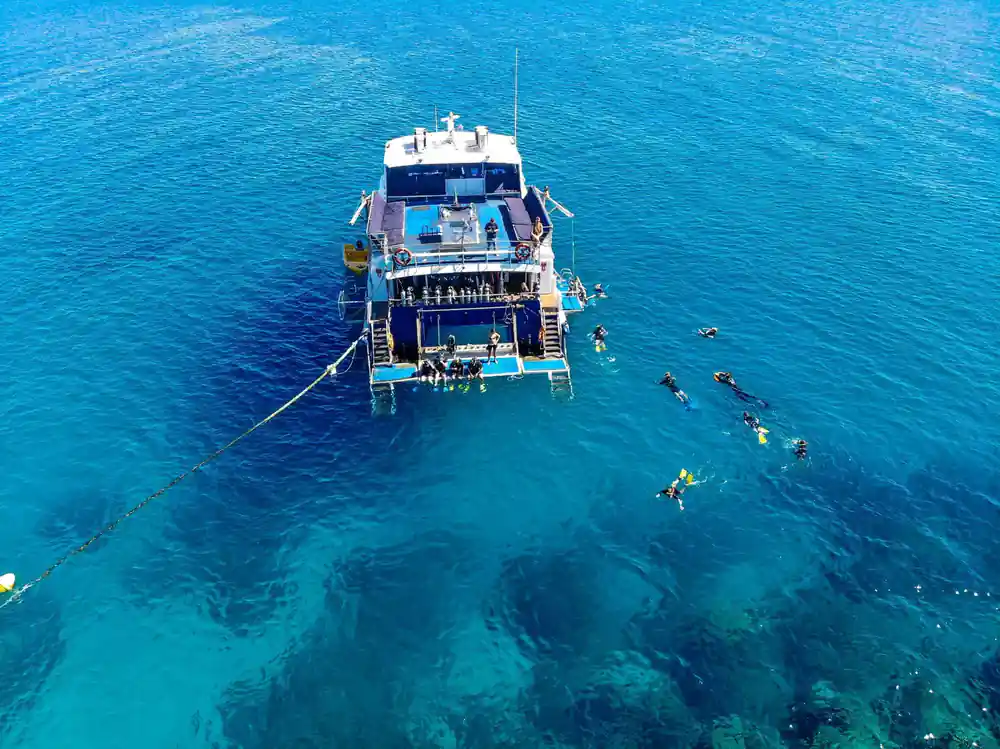
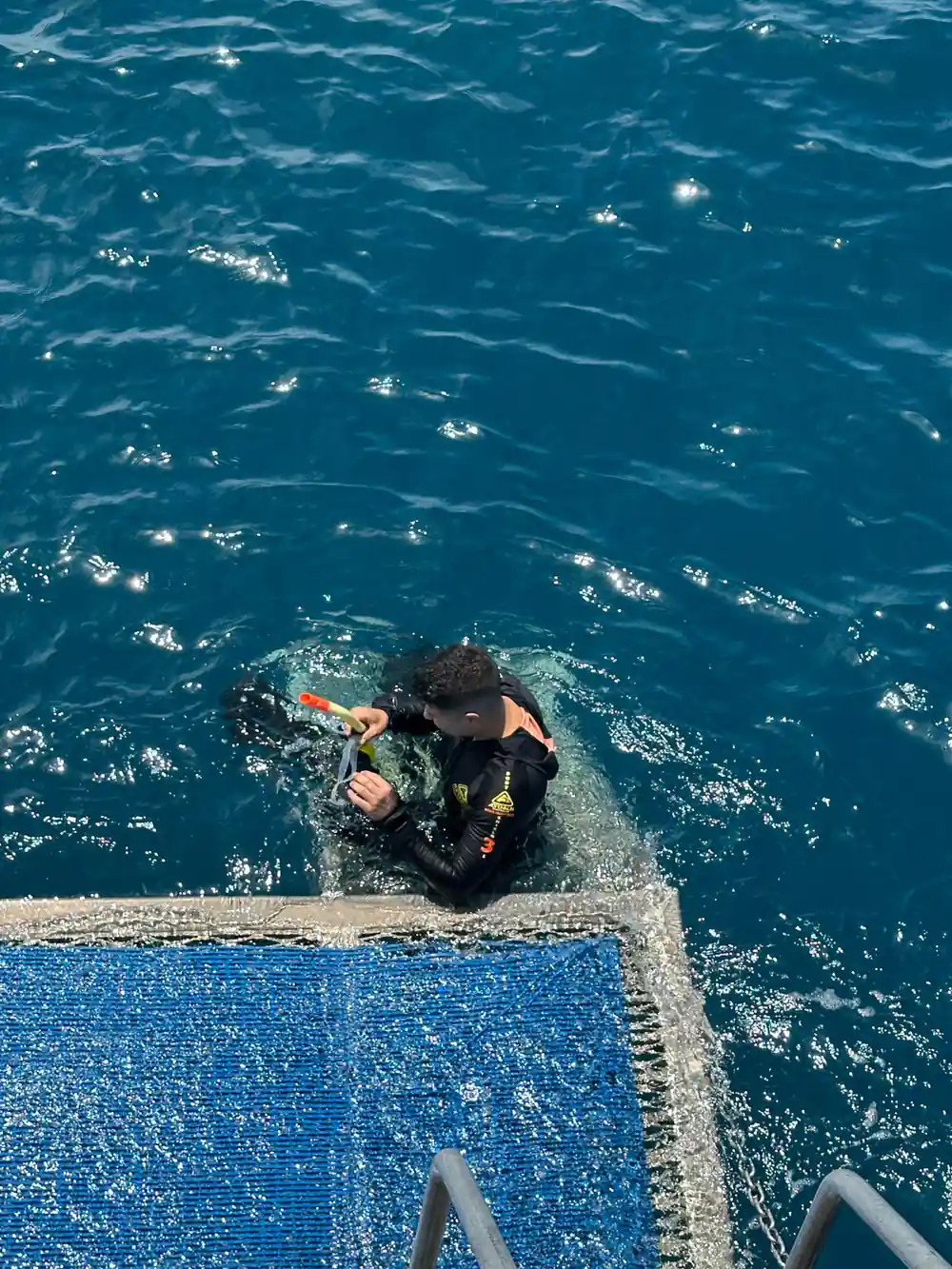
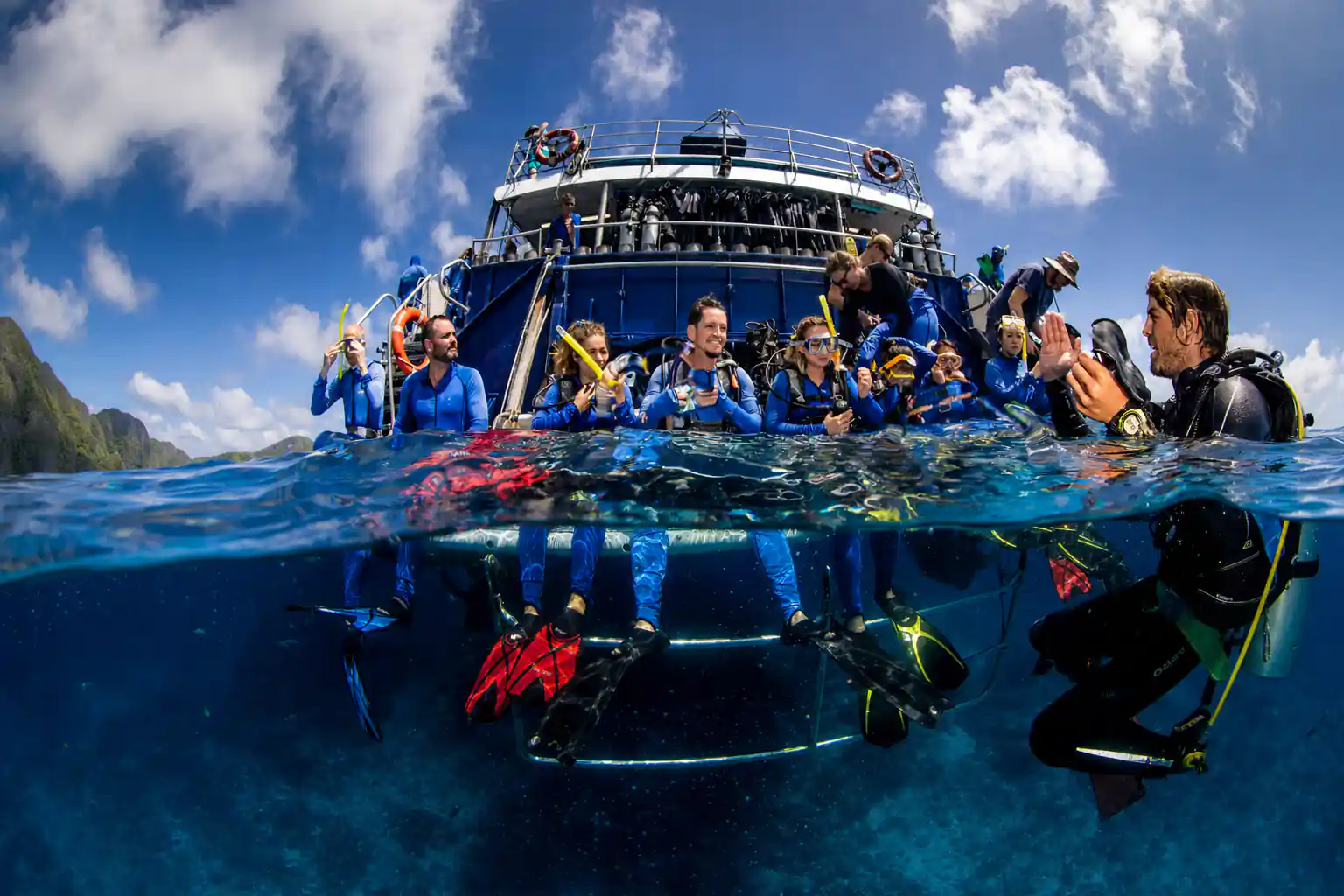
On a day trip from Cairns, 'outer' usually refers to a pontoon or a mooring on the outer reef; Sunlover's Moore Reef pontoon is 47 kilometres offshore.[2] Great Adventures also operates daily tours from Cairns to an outer reef pontoon.[3] Once you are there, the boat becomes your base, with easy water access from a stable platform. You can snorkel, dive, or simply float and watch the fish. Most operators keep a watchful eye on swimmers, and the crew will point out creatures you might otherwise swim straight past. If you have never snorkelled in open water, the platform is a reassuring place to start.
Why Distance From the Coast Matters
The extra distance buys clearer water and less muddy run-off from the coast. The outer reef also tends to have stronger current, which can make for a livelier drift over the coral. If you are prone to seasickness, the open-water stretch deserves respect. Check the marine forecast the night before, and if the crew offers seasickness advice, take it. On a calm morning the crossing can feel like a gentle ride; in a fresh breeze it becomes a proper sea passage. Either way, the crew has done the run many times and will keep you informed.
That distance also shapes the day. The featured all-inclusive reef trip with scuba dive is listed as a 1-day experience, and the return crossing is part of the advertised duration.[4] That means a morning departure, a solid block of reef time, and an afternoon return to Cairns. For many travellers, the rhythm feels right: enough time in the water to justify the ride, but not so long that you feel marooned.
A stable pontoon and a fast catamaran make the outer reef an easy full-day trip.
What You Are Actually Snorkelling On
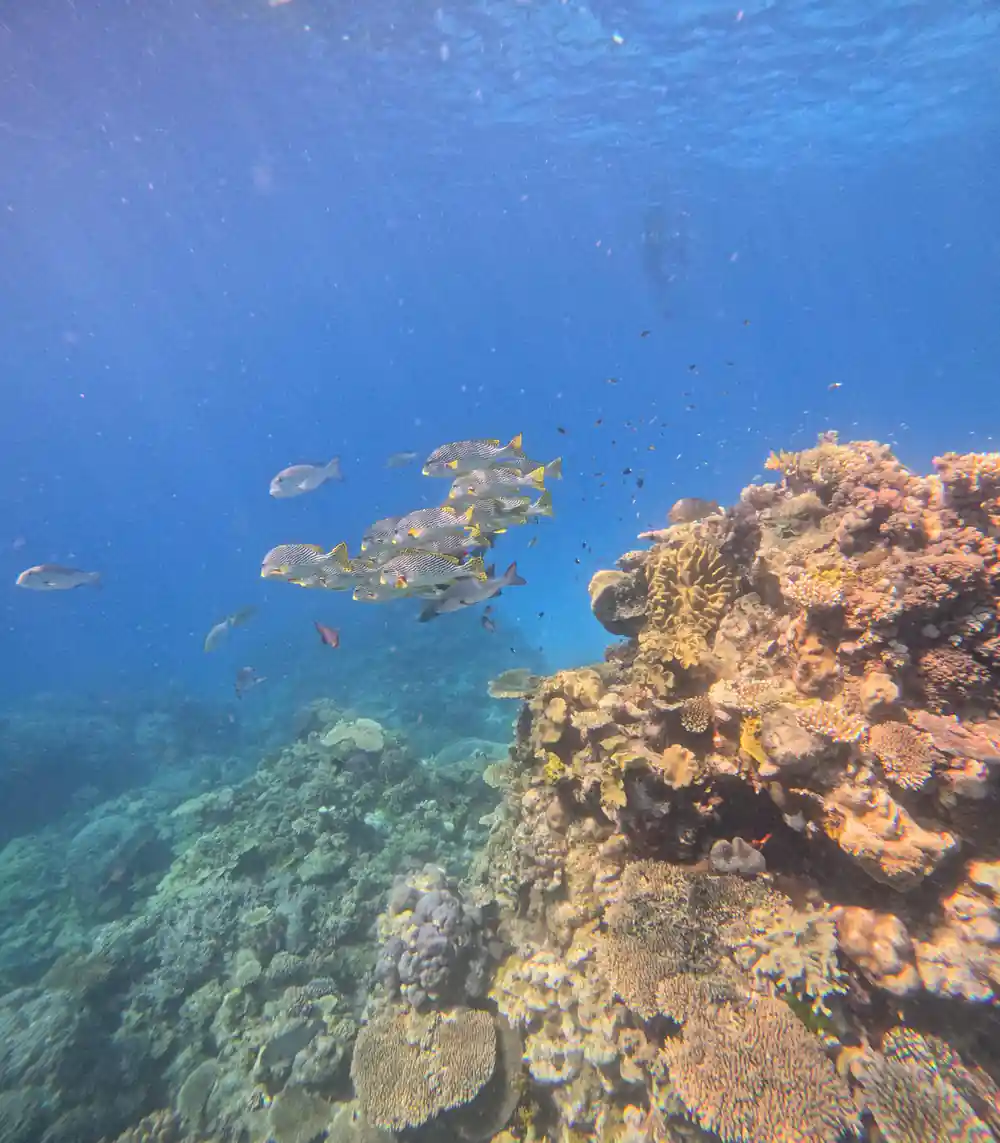
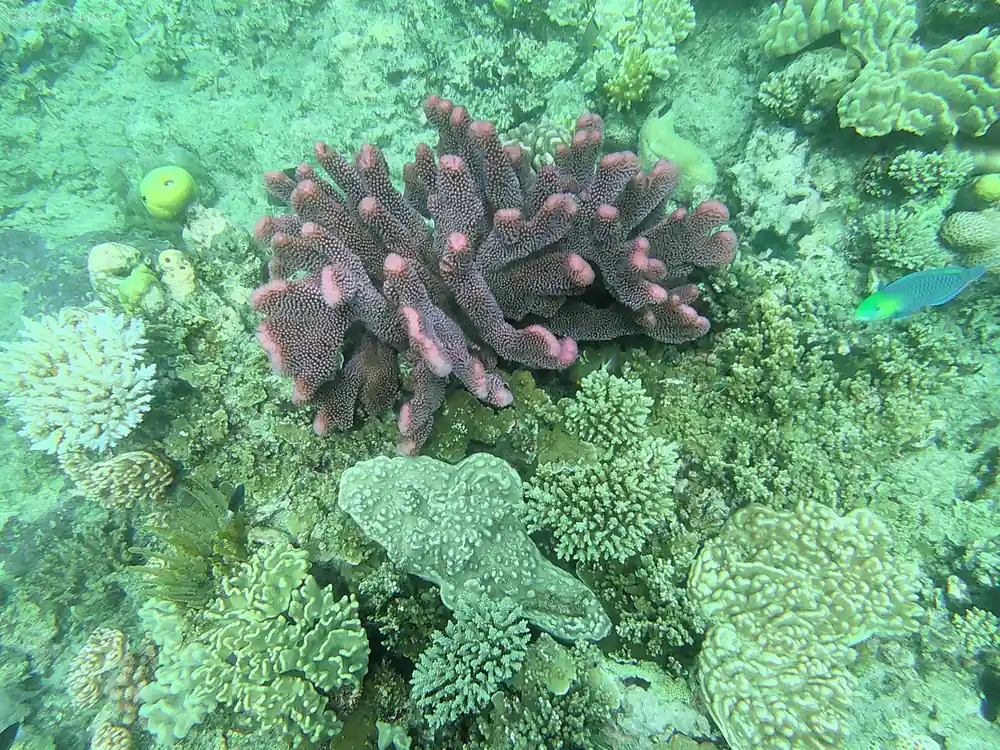
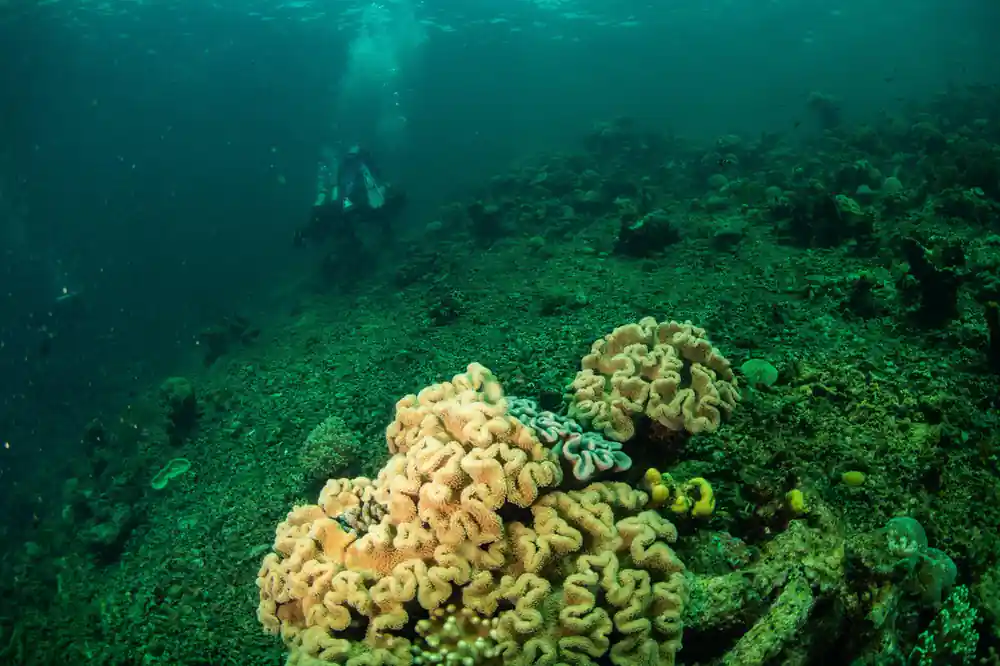
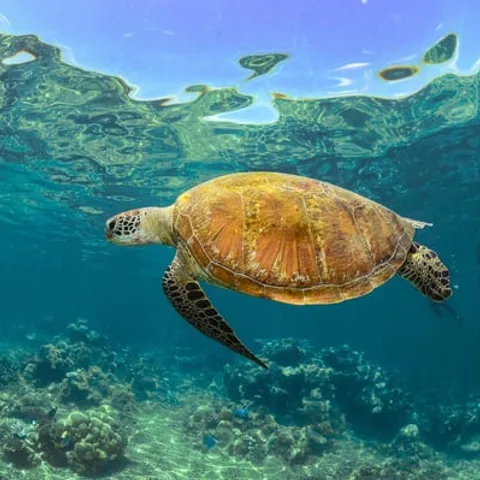
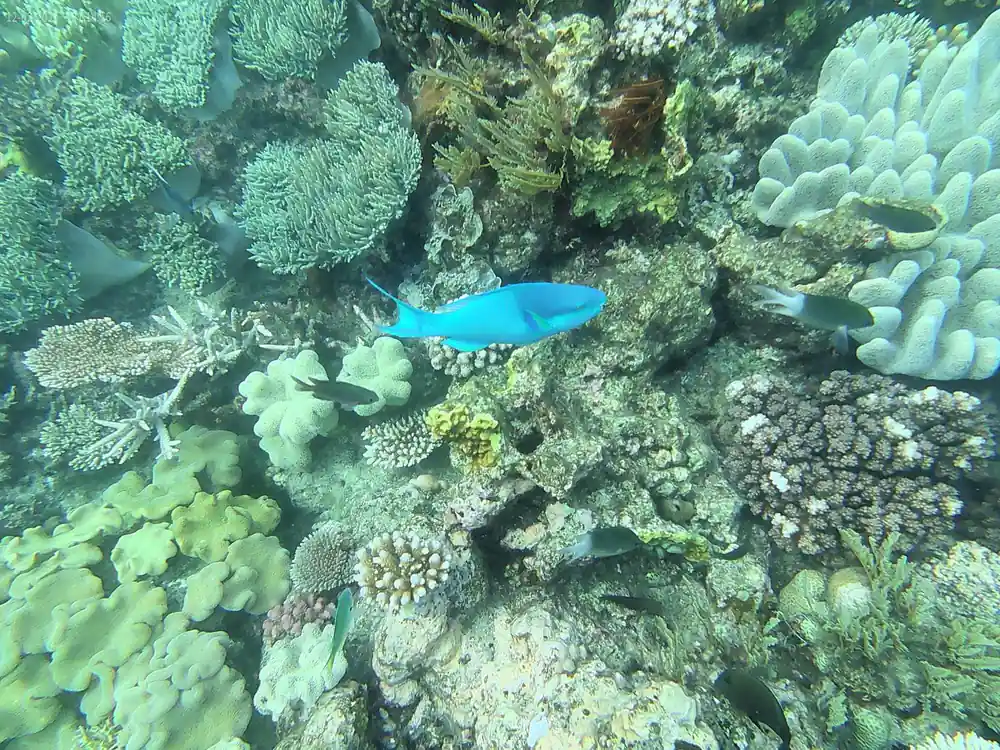
You are snorkelling over living coral, not a rock shelf. In the Great Barrier Reef, you'll find more than 1,600 fish species, over 600 coral species, and six of the planet's seven marine turtle species.[10] Around a pontoon, you can often see parrotfish, angelfish, surgeonfish and the occasional small reef shark; a turtle is the lucky sighting. Nobody can promise an exact list for a single day, but the variety is the point. Look for the flash of a blue tang or the slow cruise of a parrotfish; coral bommies hold small critters that dart between branches. Time in the water is the only way to catch these moments.
Coral health is a live topic. On the northern Great Barrier Reef, region-wide average hard coral cover increased from 30.0% in 2025 to 35.1% in 2026.[7] A single snorkel site can still vary a lot within a season, but the direction is encouraging. Choosing a trip with a pontoon also gives you a stable base and helps you spend more time looking at the reef instead of managing your buoyancy. It gives you a place to rest, warm up and swap stories between dips, which makes the day feel unhurried.
The Trade: A Longer Crossing in Open Water
The trade is simple: more time on the boat, more reward in the water. Reef boats from Cairns use the Reef Fleet Terminal at 1 Spence Street, Cairns.[11] That includes the outer barrier reef tours from Cairns that run to the open-water edge. From there, boats head out across open water; Sunlover's Moore Reef pontoon sits 47 kilometres offshore.[2] Sit upstairs, feel the breeze, and let the city shrink behind you as the water turns from green to deep blue. It is also a good moment to spot seabirds working the surface or, with luck, a pod of dolphins riding the bow wave.
Modern catamarans have shaded decks, indoor seating and crew who keep a close eye on the water. If the crossing looks rough, take a seasickness tablet before boarding rather than waiting until you feel unwell. Once the boat is tied to the pontoon, the movement settles, and the reef becomes the focus. Give yourself the same sea time for the return, and factor it into any evening plans. Once you are back on land, a shower and a cold drink will feel well earned.
from US$196
The featured Cairns all-inclusive reef trip with scuba dive, with free cancellation and reserve now, pay later.
Do All Cairns Reef Trips Go This Far Out
Not all Cairns reef trips head to the outer edge. Some popular day trips stop at islands closer to shore. Reaching Green Island takes roughly 45 minutes by catamaran, and the island lies 27 kilometres away from Cairns.[12] Fitzroy Island is 29 kilometres southeast of the city and the ferry ride takes about 45 minutes.[13] These are easy, scenic options with beaches and calm reef swimming, but they are not the same as an outer reef pontoon day. On an island trip you may step onto sand between swims, while the outer reef keeps you on the water for most of the day. Both styles have loyal fans, and neither is a compromise if it matches your mood.
Outer great barrier reef tours Cairns operators head to the open-water side, past those islands. Check the stop list before booking. If it names Moore Reef, Hastings Reef or a pontoon, you are heading to the outer reef. If it names Green Island or Fitzroy Island, expect a closer, island-based day. Both have their place; the label on the listing tells you which one you are buying.
Choosing Between a Closer Trip and an Outer Reef Trip
If your main goal is to see coral and fish without a long ride, a closer island can be the right call. If you want the full-scale reef experience, with a pontoon, deeper water and a scuba option, choose an outer reef tour. Neither is wrong; they are simply different ways to spend a day on the water. The choice comes down to how much time you want to spend offshore and how comfortable you are on a moving boat. Bear in mind that a full day on the water means early starts, big lunches and a quiet evening afterwards. For most people that is exactly what a reef day should feel like.
For great barrier reef outer reef tours Cairns travellers, the all-inclusive trip with scuba dive is from US$196.[4] You can reserve now and pay later; cancellation is free up to 24 hours before.[4] That gives you room to adjust your plans if the weather turns, and it makes the from-price easier to compare with other full-day listings. A flexible booking is a practical comfort.
Planning Your Outer Reef Day From Cairns
Cairns' dry season lasts about May through October, bringing sunny conditions, low humidity, and pleasant warm days.[5] Roughly December to March, the wet season brings heat, humidity, and frequent afternoon showers.[5] The reef is open year-round, but your packing list should shift with the season. In the dry months, a light long-sleeve shirt is enough for sun protection; in the wet months, a rain jacket is useful for the return crossing. Either way, layers are your friend: the boat can feel cool on the way out and warm by the afternoon.
In tropical Queensland, Marine stinger season usually lasts November to May, a period with greater risk from dangerous jellyfish.[6] On the reef, water temperatures average 29°C during summer and 24°C in winter.[14] And remember the Reef Environmental Management Charge: $8.50 per day for a full-day passenger.[15] It is a small addition to the fare, and you should count it into your budget when comparing tours. Ask at booking if the charge is folded into the fare or added separately; the final price should not be a surprise.
Distance from Cairns
Outer Reef Trip Prices
From US$196[4], US$179[16], US$163[17], US$125[18].
When to Go
Plan Your Outer Reef Day
Choose your trip
Decide between an all-inclusive day trip with scuba and a snorkel-only tour. The featured trip includes a scuba dive and is from US$196.[4]
Check departure point
Most boats leave from the Reef Fleet Terminal at 1 Spence Street, Cairns; arrive with time to check in.[11]
Pick your season
The dry season from May to October is the calmest, while the wet season runs roughly December to March.[5]
Pack for the water
Take reef-safe sunscreen, a rash vest, a towel and any seasickness tablets; water temperature varies by season.[14]
Ask about the charge
Check whether the Reef Environmental Management Charge is included in the fare; it is $8.50 per day for a full-day passenger.[15]
Ready to spend a full day on the outer reef?
from US$197Reserve now & pay later