Quick summary
- A reef pontoon is a large floating platform moored directly on a reef lagoon, with easy water access and stable footing.
- The recommended tour runs for 7.5 hours and is wheelchair accessible.[1]
- The Cairns Outer Great Barrier Reef Pontoon with Activities starts at US$200 per person.[1]
- This tour can be cancelled up to 24 hours before the start for a complete refund.[1]
- On the Outer Reef, Sunlover's Moore Reef pontoon lies 47 km offshore.[2]
| Outer Reef Pontoon | Best Value All-inclusive | Premium Catamaran | |
|---|---|---|---|
| From | from US$200[1] | from US$196[3] | from US$193[4] |
| Duration | 7.5 hours[1] | 1 day[3] | 9 hours[4] |
| Style | Stable pontoon platform | Catamaran with scuba dive | Premium catamaran cruise |
| Access | Wheelchair accessible[1] | Instructor: English[3] | Live tour guide: English[4] |
| Cancellation | Free up to 24 hours[1] | Free up to 24 hours[3] | Free up to 24 hours[4] |
Explore the magnificent Great Barrier Reef with Great Adventures' daily tours from Cairns, Tropical North Queensland.
The final call
Getting there and boarding
What a Reef Pontoon Actually Is
A reef pontoon is a large, stable floating platform moored directly on a reef lagoon. On the Outer Reef, Sunlover's Moore Reef pontoon lies 47 km offshore.[2] It is a stable two-storey base with snorkelling, a waterslide, an underwater observatory and more, so everyone experiences the reef their own way.[2] For a first-time visitor, that arrangement removes much of the guesswork: you travel out on the catamaran, step onto the platform, and the reef is right there. You do not need to be an experienced diver or a strong swimmer to enjoy the day.
The Great Barrier Reef itself is vast, spanning more than 2,300 kilometres along the northeast coast of Australia and made up of some 3,000 individual coral reefs.[10] A pontoon gives you one fixed point in that huge system. For the Cairns Outer Great Barrier Reef Pontoon with Activities tour, the day is based around a catamaran run to the reef and back.[1] That straightforward shape makes it an easy trip to picture before you go: leave Cairns, reach the outer reef, spend the day on the platform, and return the same way.
The reef is home to over 1,600 species of fish, over 600 species of corals, and six of the world's seven species of marine turtle.[11] From a pontoon, that life is right below you. You can lower yourself into the water in seconds, rather than waiting for a boat to reposition. Once you are in, the quiet water around the platform is a comfortable place to get your bearings before swimming out over the coral.
How a Pontoon Day Differs From a Boat Trip
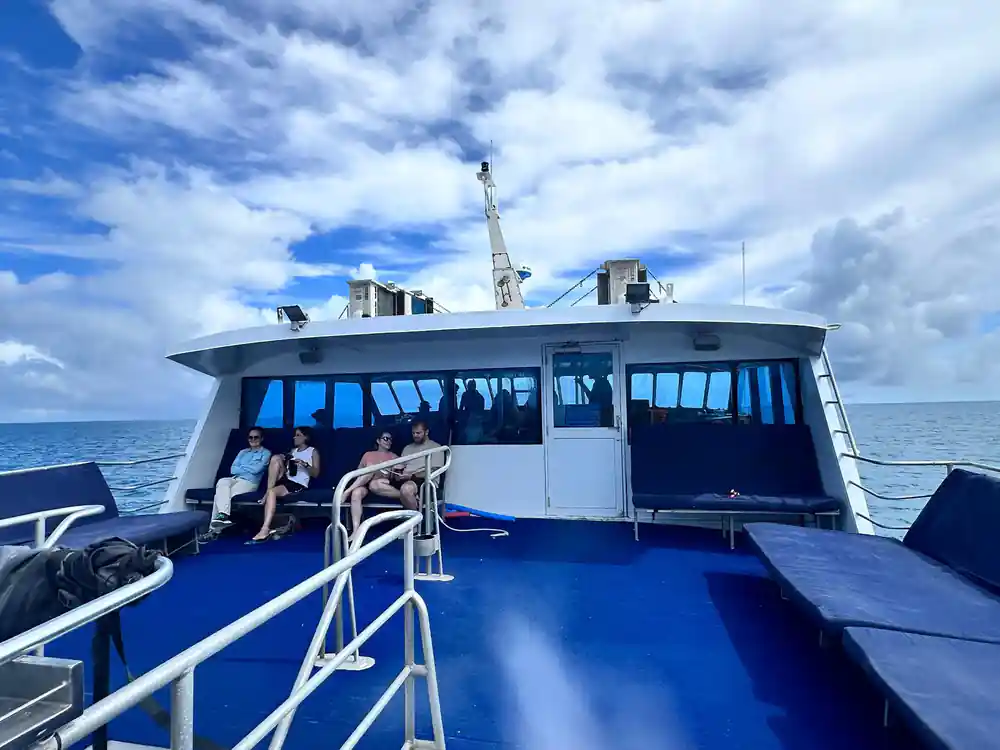
A boat trip often moves between locations, while a pontoon day stays moored in one place. On the Outer Reef, Sunlover's Moore Reef pontoon lies 47 km offshore.[2] The pontoon tour itself runs for 7.5 hours, with the catamaran taking you out and then back again.[1] For many travellers, that rhythm is easy to manage: a solid crossing, a long and unhurried stretch on the reef, and a relaxed sail home at the end of the day.
That single-location format means you can settle in. You travel by catamaran to the reef and back again.[1] The tour is wheelchair accessible, an important detail for anyone planning with limited mobility.[1] If your plans change, free cancellation also applies up to 24 hours beforehand.[1] You are not moving between sites. There is no need to gather your gear and relocate once you are comfortable; the platform is your base until the crew calls you back to the boat.
By contrast, some full-day trips from Cairns spend the day visiting several Great Barrier Reef sites.[12] That gives you more variety, but it also means more time moving between locations. If you would rather wake up early, stay in one place and let the reef life come to you, the pontoon is the calmer option. Families and groups with mixed confidence levels often appreciate that steadier pace.
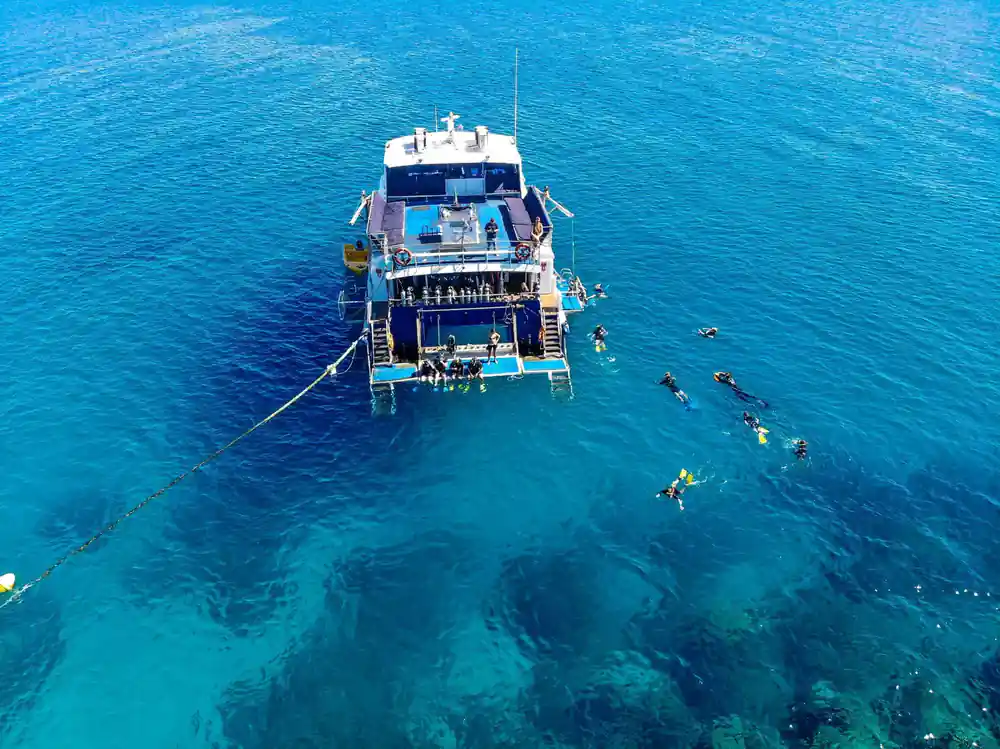
A catamaran moored at a reef pontoon on the outer Great Barrier Reef.
Who a Pontoon Genuinely Suits Better
A pontoon day suits anyone who wants a stable base for the day. You are not chasing sites across open water, and you can come and go from the platform as you please. You can set up a spot for your bag, alternate between sun and shade, and take breaks whenever you feel like one. The platform holds steady while the tide moves around it. Beginners can focus on the water rather than on balance.
It is a strong fit for families, first-time snorkellers and travellers with mobility considerations. The wheelchair accessible status of this tour makes it one of the easier ways to experience the outer reef.[1] If you prefer a lazy, unhurried day rather than a multi-stop itinerary, this is the style for you. It also suits anyone who likes the idea of a day on the ocean but does not want to spend all of it on a moving boat.
The pontoon also suits people who want to spend long stretches in the water. Once you are there, the reef is not going anywhere. You can snorkel, swim, or simply float at your own pace. If you are learning to snorkel, staying close to the platform gives you a comfortable place to practise without needing to follow a guide far from the group.
What You Can Actually Do From a Reef Pontoon
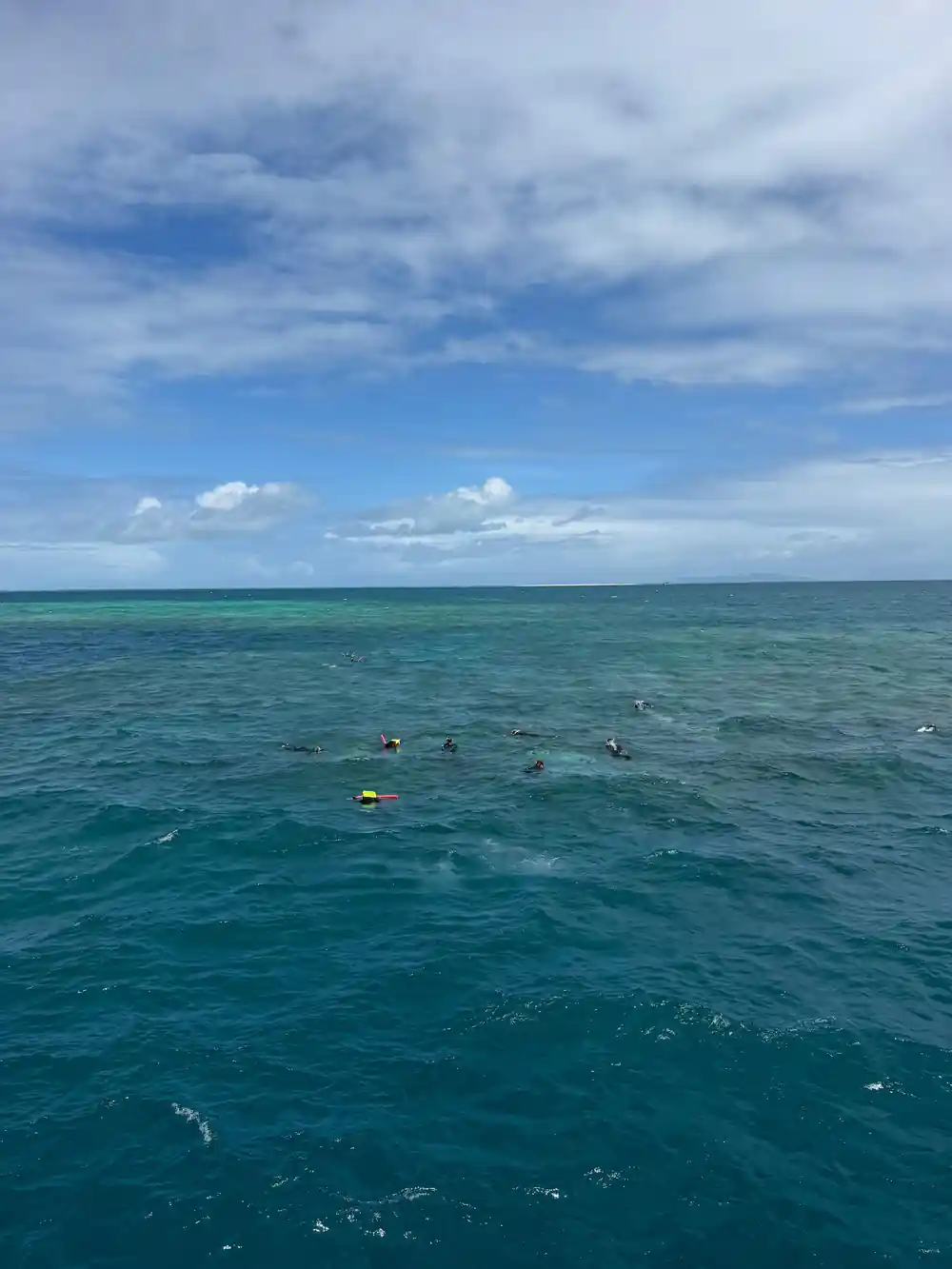
From a pontoon, the reef is right below you. You can pull on a mask and fins and glide out over the coral without a long boat transfer, or simply float on the surface and watch the fish. You can also climb back onto the platform whenever you want a rest, dry off for a few minutes, and then slip back into the water for another look. The lack of a fixed timetable once you are on the reef is one of the great pleasures of this format.
The reef waters are warm enough for year-round swimming. From June to August in winter, the reef off Cairns has average water temperatures of 24°C; from December to February in summer, they are 29°C.[7] If you want dry-season comfort, Cairns enjoys its dry season from May to October, with sunny days and low humidity.[6] If you come between December and March, you are in the wet season, when warm, humid conditions and the possibility of thunderstorms are part of the rhythm of the tropics.[6]
If you are visiting between November and May, marine stinger season typically runs in those months.[9] Ask at check-in what protective gear the operator provides. The crew will have local advice, and it is a simple conversation to have before you board. A little preparation means the day is about the reef, not the conditions.
from US$200
The Cairns Outer Great Barrier Reef Pontoon with Activities includes a catamaran transfer, a stable reef platform and 7.5 hours out on the water.[1]
What a Pontoon Gives Up
The trade-off is variety. A pontoon is one fixed location. You don't get the changing scenery of a trip that visits several reef sites. Other full-day trips from Cairns are built around moving between reef locations.[12] If your idea of a perfect reef day is a new view every hour, you may prefer one of those.
You also spend time on the catamaran getting there and back. That is part of the experience, but it means the day is shaped around a single mooring rather than a series of reef stops. The crossing is part of the day, with sea air and wide views, but it is not the same as being in the water. If your main goal is to see as much of the reef as possible, a multi-site boat trip may suit you better.
There is also the reef management charge to consider when budgeting for a reef day. A full-day passenger pays $8.50 per day for the Great Barrier Reef Environmental Management Charge.[8] It is a small line in the total cost of a day out. Knowing the figure in advance makes it easier to compare tours fairly.
A Full Day by Catamaran, the Trip This Site Is Built Around
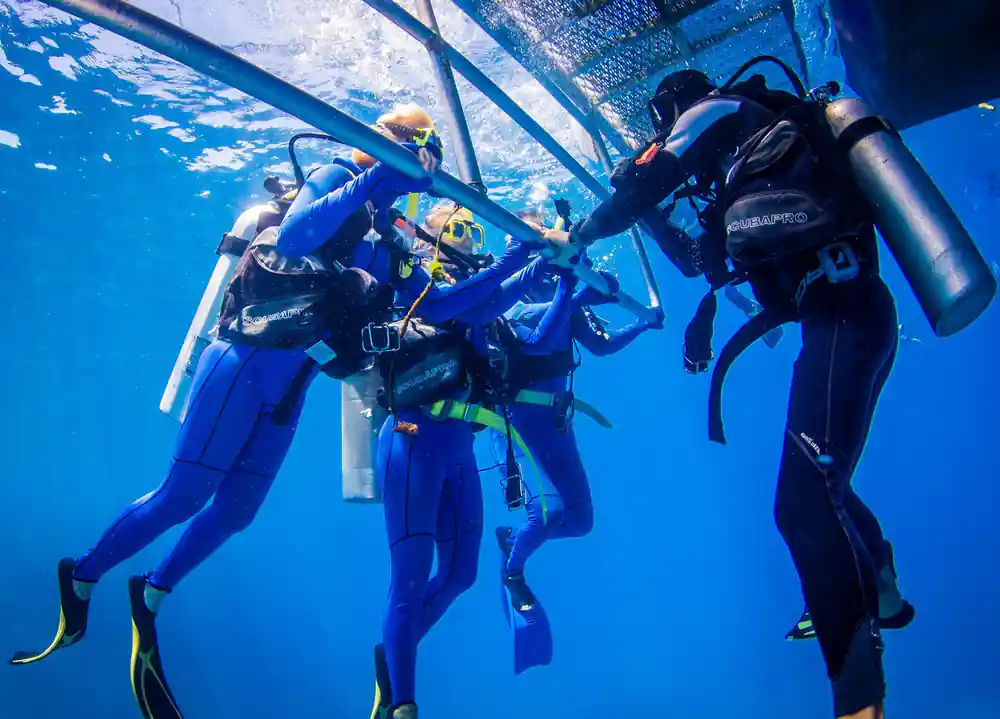
If you want the crew-led, all-inclusive version of a reef day, the Cairns Best Value All-inclusive Reef Trip With Scuba Dive is the other strong option. It is priced from US$196 and runs for one full day.[3] The trip uses a catamaran to travel to the Great Barrier Reef, allows time at the reef, then returns by catamaran.[3] For divers, the listing's name signals that a scuba dive is part of the package, which is worth comparing against the pontoon tour's day on the water.
This is the trip this site is built around, and it is a good counterpoint to the pontoon experience. You get the same reef, but the day is organised around the boat and its crew rather than a fixed platform. You may book immediately, pay later, and cancel at no charge up to 24 hours before.[3] If you enjoy the rhythm of a crewed vessel, with people moving around you and activities unfolding from the deck, this tour gives you that energy.
If you want a day with a scuba dive as part of the package, this catamaran trip is worth comparing directly against the pontoon tour. Both get you to the outer reef, but they feel different once you are there. The pontoon is steadier underfoot; the catamaran keeps the day moving. Choosing between them is really a question of how you like to spend your time on the water.
Choosing Between the Two
Both tours take you to the outer reef, but they feel different. The Cairns Outer Great Barrier Reef Pontoon with Activities is your stable, platform-based day, from US$200.[1] The Best Value All-inclusive Reef Trip With Scuba Dive is your catamaran-based alternative, from US$196.[3] Look at your group and your energy levels. If someone in your party has limited mobility, the pontoon has a clear advantage because of its wheelchair accessible status.[1]
Think about what you want from the day. If a fixed platform and easy water access sound right, book the pontoon tour. If you prefer the all-inclusive, crew-led boat experience, choose the catamaran trip. Either way, you are heading to one of the world's great reef systems. You can always decide closer to the date: both options offer reserve now and pay later, and both allow free cancellation up to 24 hours in advance.[1][3]
A reef day should feel like a highlight, not a challenge. The practical details, such as the catamaran crossing and the 7.5-hour day, are easy to plan around.[1] Once those are settled, the choice comes down to whether you want a steady home base on the water or a boat that brings the day to you. Both are excellent ways to experience the outer reef.
From prices for full-day reef trips
Compare from prices
From US dollar from-prices in the cited listings:[1],[3],[4].
When to book your pontoon day
How to choose your tour
Stability first
Decide whether you want a fixed platform or a boat-based day.
Check the hours
The pontoon tour runs for 7.5 hours.[1]
Compare prices
From US$200 for the pontoon day, from US$196 for the all-inclusive catamaran trip.[1][3]
Review the route
The pontoon day is a catamaran transfer out to the reef and back.[1]
Book with confidence
Book right away, pay afterwards, and cancel at no cost up to 24 hours ahead.[1]
Ready for your full day on the outer reef pontoon?
from US$200